CKYCRR 2.0 is going live this monthAutomate your CKYC end-to-end todayExplore
CKYC Compliance on Autopilot
Automate your entire CKYC workflow, from onboarding, verifications, submissions, and status tracking. Complete CKYC 2.0 solution with AI-powered checks ensure your data is always accurate and compliant. No manual effort, no back-and-forth.

10M+
CKYC Search & Download Monthly
<0.3s
Average Response Time
95%+
Success Rate for Create/Update in First Attempt
80%
Reduction in Operations Cost & Effort
CKYCRR 2.0 Workflow by Digio
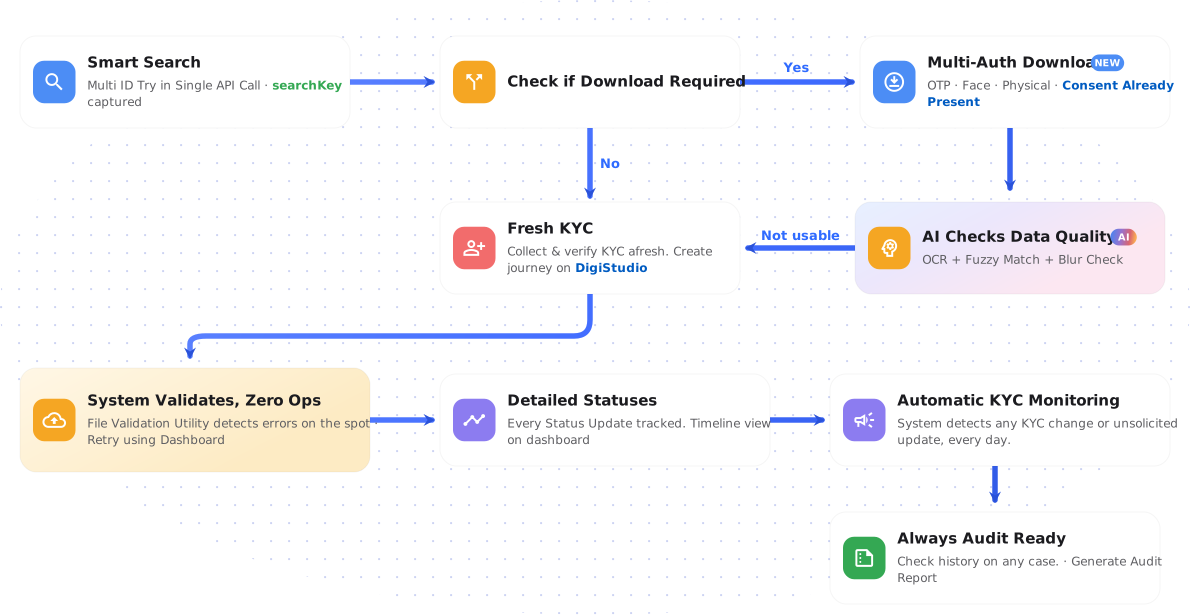
Common CKYC Challenges
A simple KYC flow often turns into delays, drop-offs, and repeated manual efforts across teams and systems.

Integration Takes Time
CKYC spans multiple channels: APIs, SFTP, and maker-checker workflows; each with its own data requirements at every step. For teams approaching it for the first time, mapping the right sequence takes real effort, and reaching a working integration often takes longer than planned.

Backlogs That Keep Piling Up
When integration timelines stretch, pending cases accumulate quickly — often lakhs of records still waiting on their CKYC numbers, with deadlines approaching.

Going Live Isn't the Same as Running Smoothly
Failed cases still need manual handling, and routine events — transient connectivity, credential rotations, and scheduled maintenance windows — can interrupt processing. Without smart retries and automatic recovery, those cases sit idle until someone spots them.

Limited Visibility, Limited Control
Even when cases go through, it's hard to see the full picture. Without a unified dashboard and granular case tracking, pulling an audit-ready report or locating one customer's CKYC status across high volumes takes more effort than it should — making it harder for ops teams to prioritise and compliance teams to audit.

Coverage Gaps That Quietly Cost You
Most integrations cover the common flows — search, download, and upload — but leave gaps everywhere else. Deactivation, duplicate-record handling, and KYC update alerts often go unbuilt, and those gaps don't announce themselves; they surface later as repeated manual work and compliance lapses that can draw regulatory penalties.
Consider Every CKYC Problem Solved.
AI-powered, CKYC 2.0 ready, and built to handle individual and non-individual cases, with the highest success rates in the industry.
Seamless Integration

Clear your backlog without a single API call — simply bulk upload cases from the dashboard.
Smart Upload: post search and download, Digio automatically detects new registrations and modifications, and reuses existing CKYC numbers wherever available.
Automated download with no OTP for backlogs.
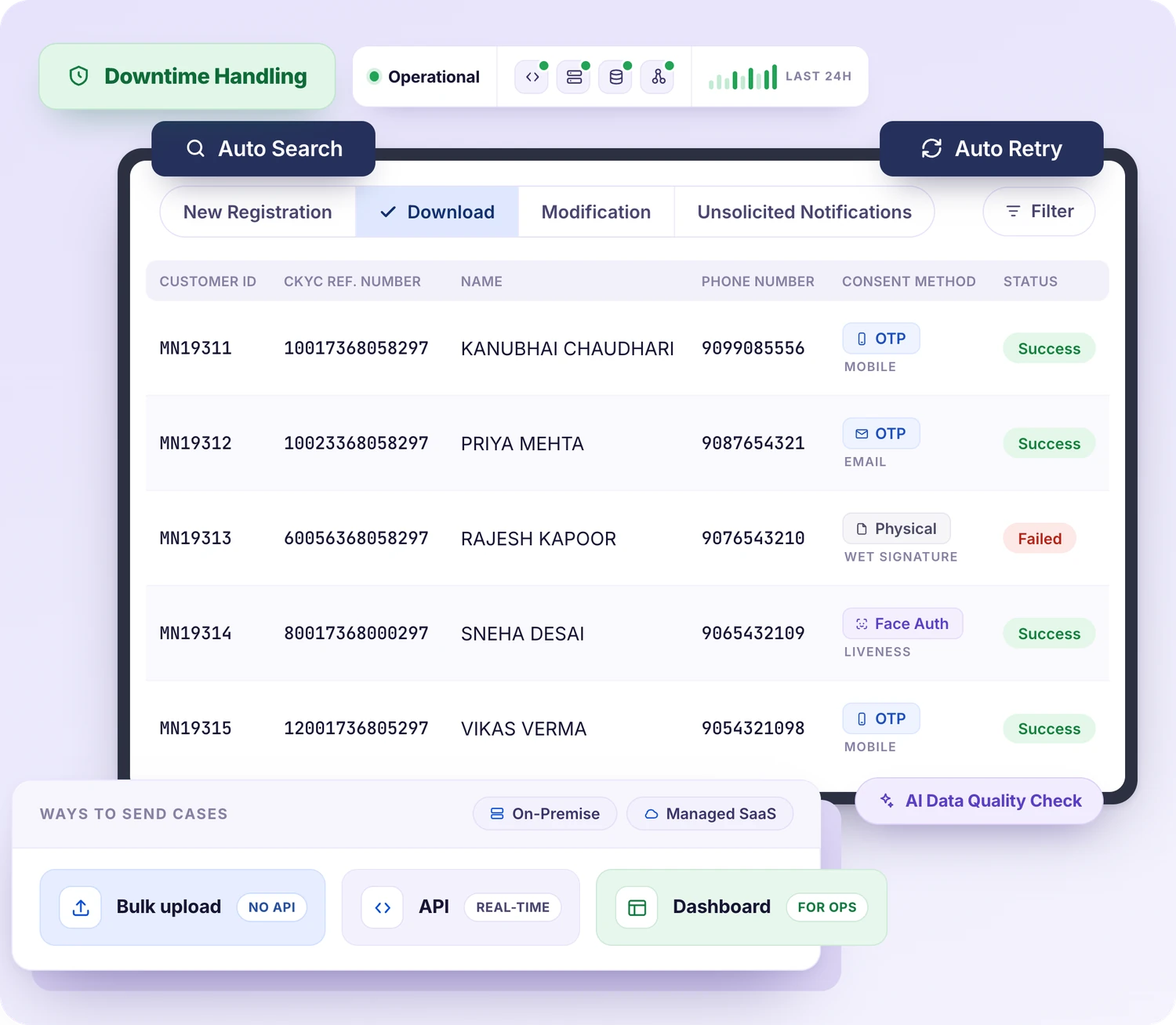
AI-powered Solution
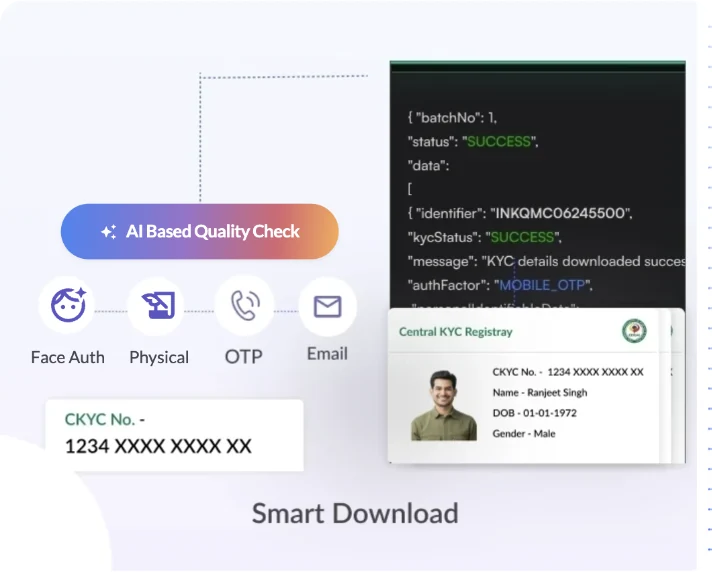
AI quality checks on downloaded data & files to confirm the record is usable — catching unreadable or mismatched data before you rely on it.
Auto probable-match decisioning — less manual effort and fewer errors.
Compare existing CKYC data against incoming data to detect real changes, so only meaningful differences trigger an update.
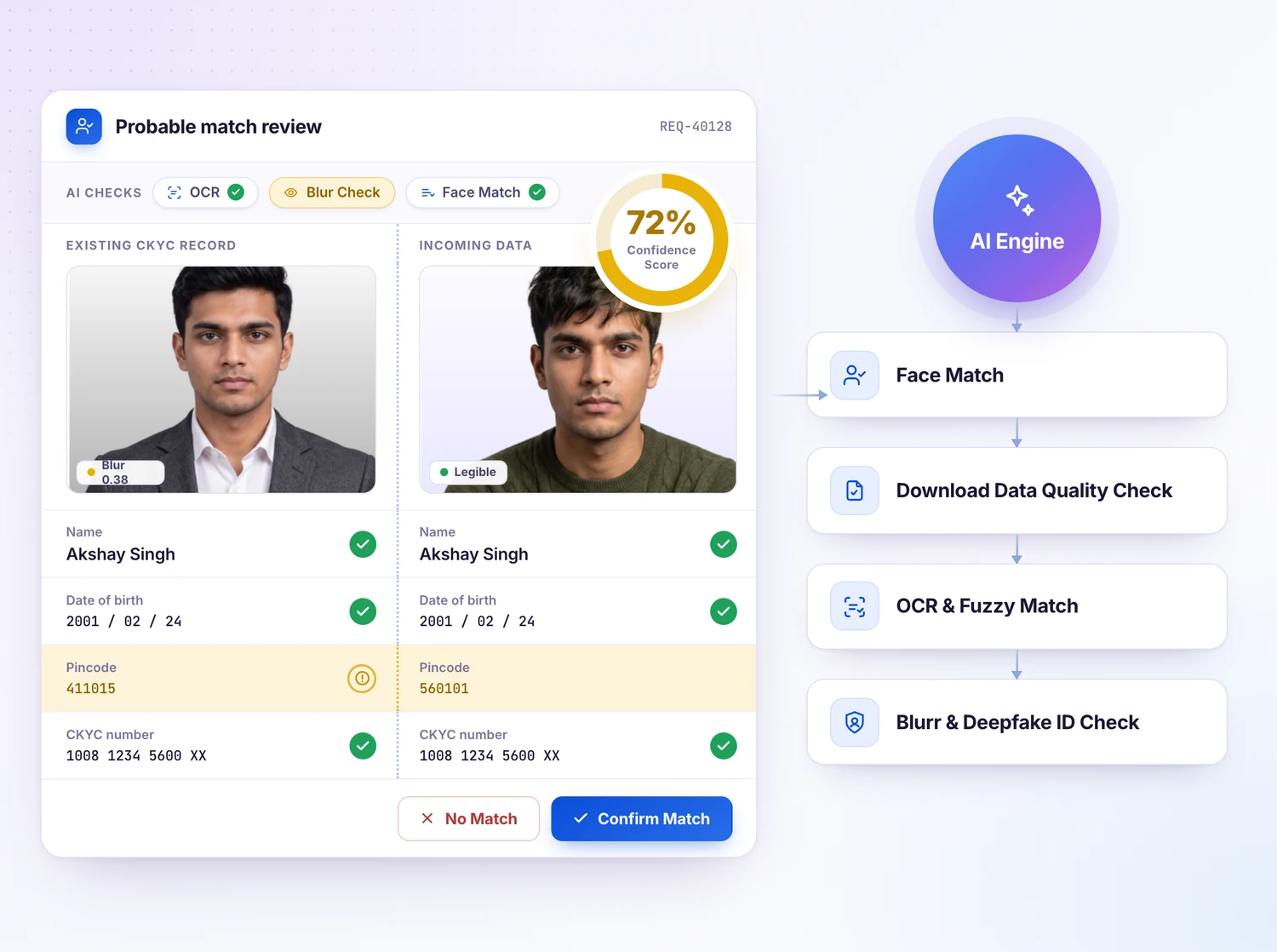
Stay in Control, Stay Compliant
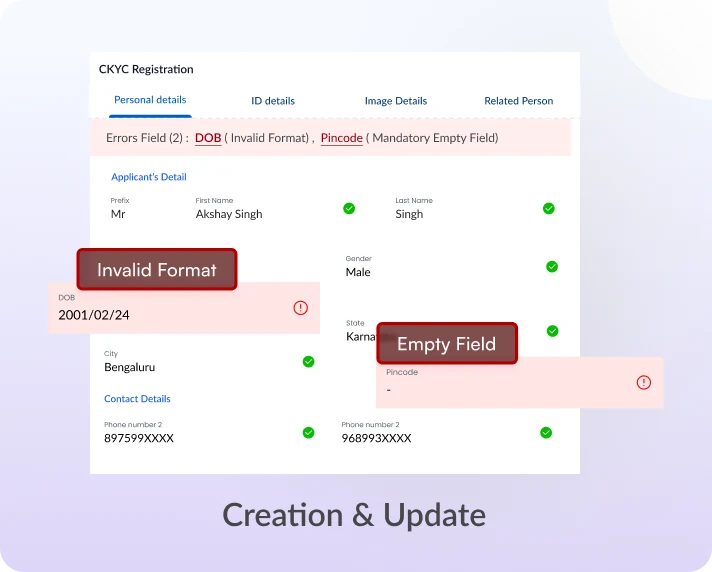
Catch every bad field before CERSAI does, with field-level validations at source.
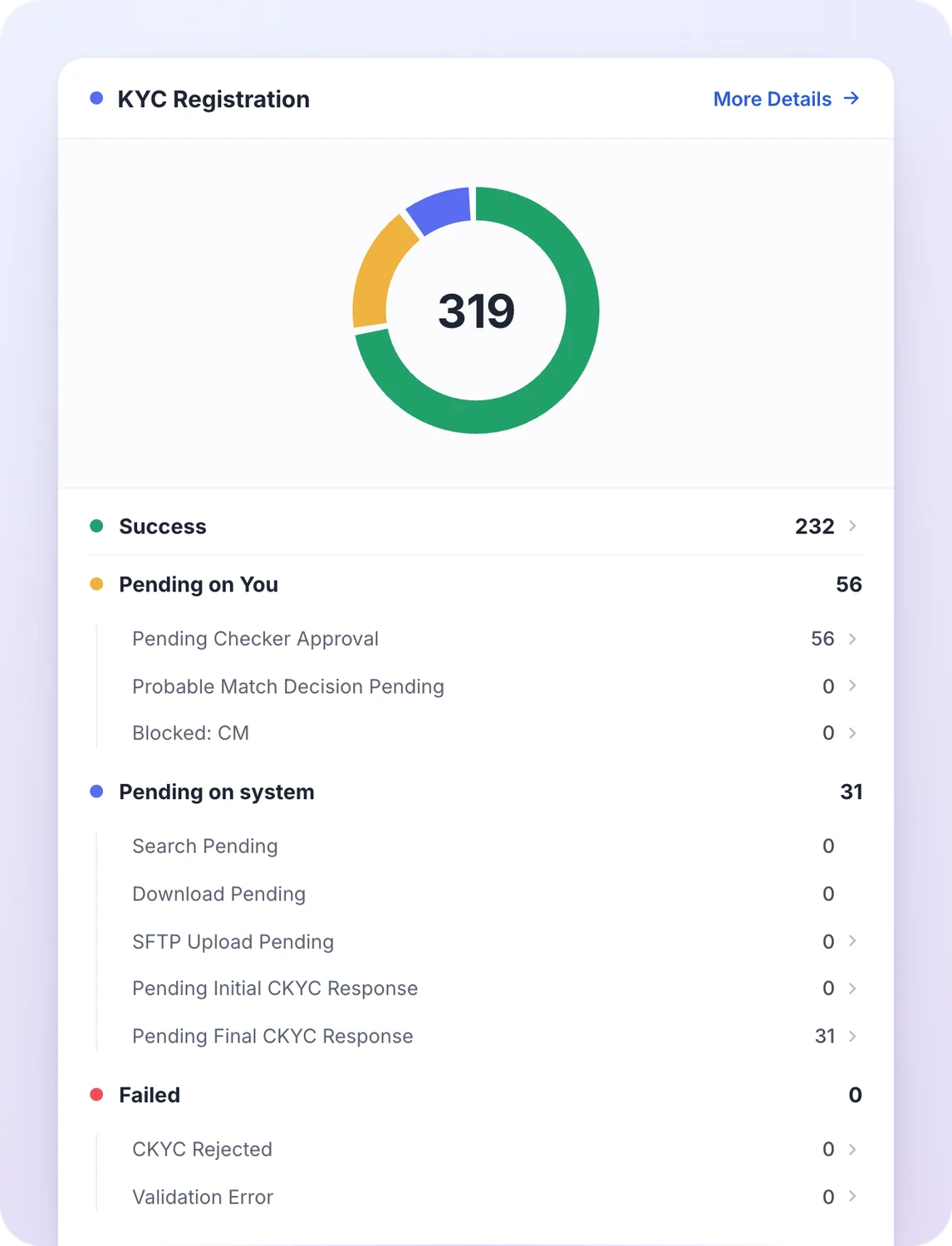
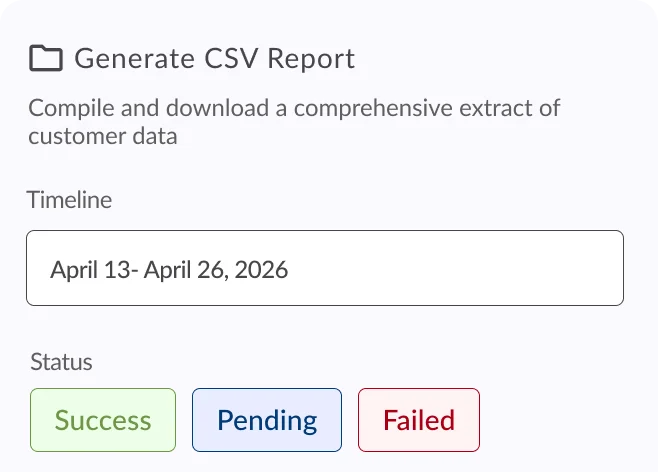
Download comprehensive reports in CSV format covering successful, pending, and failed CKYC records.
CKYC downtime handling with automatic retries and a health dashboard.
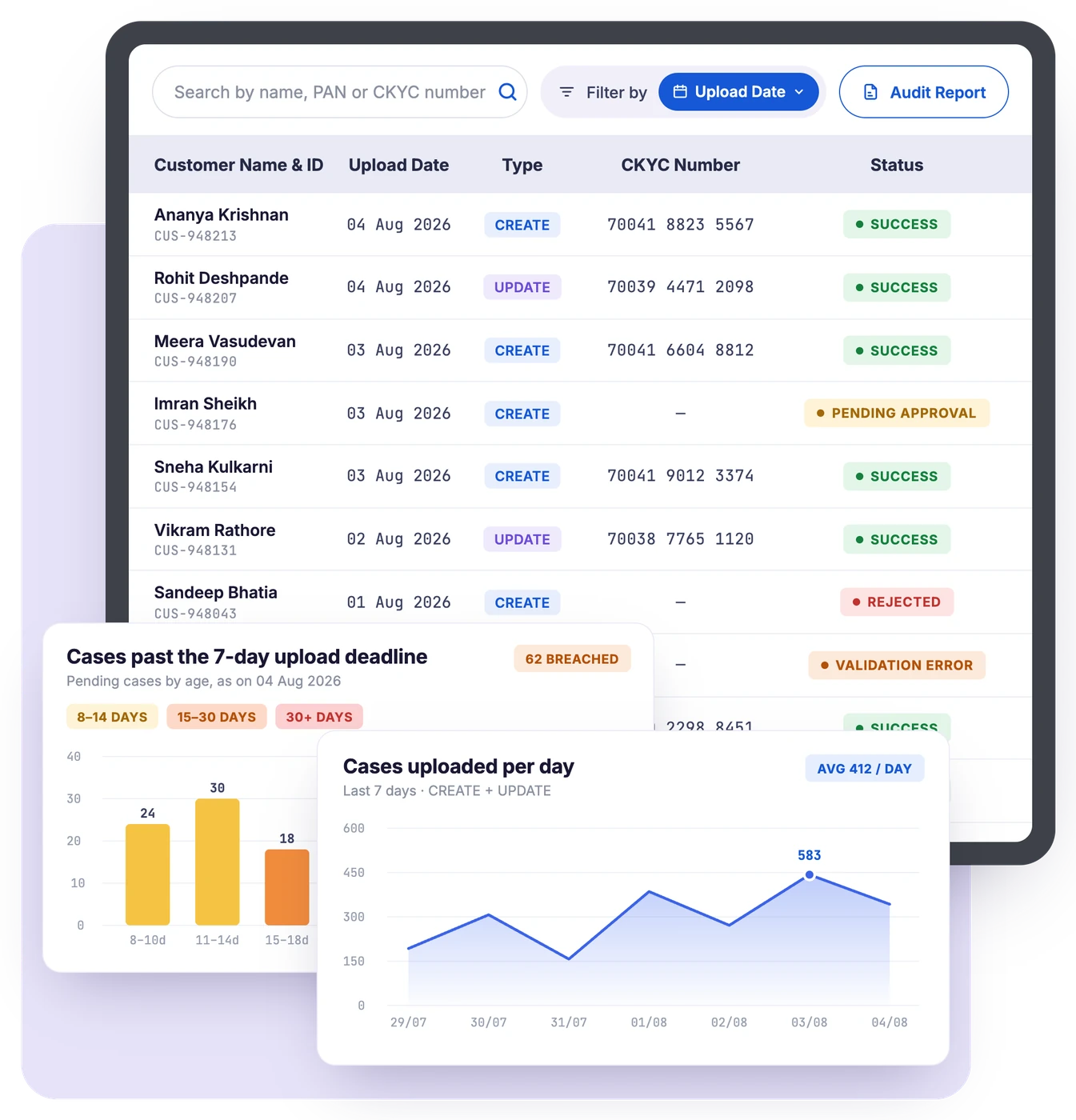
Unified 360° Views with Built-In Curing
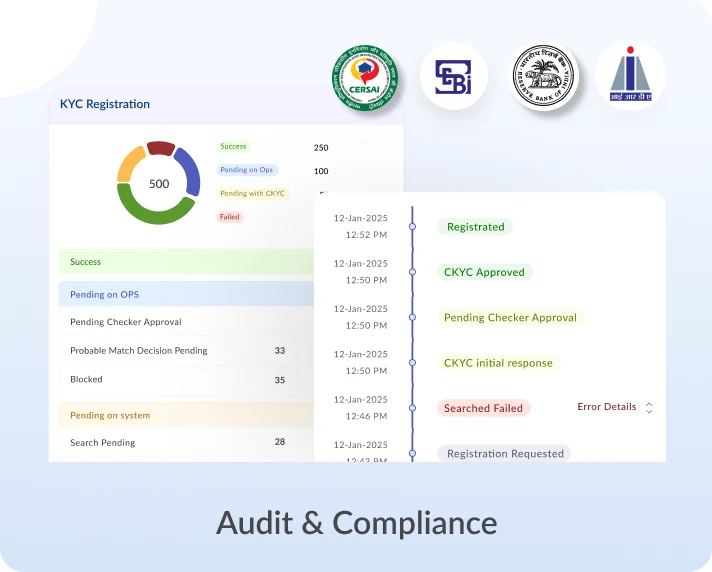
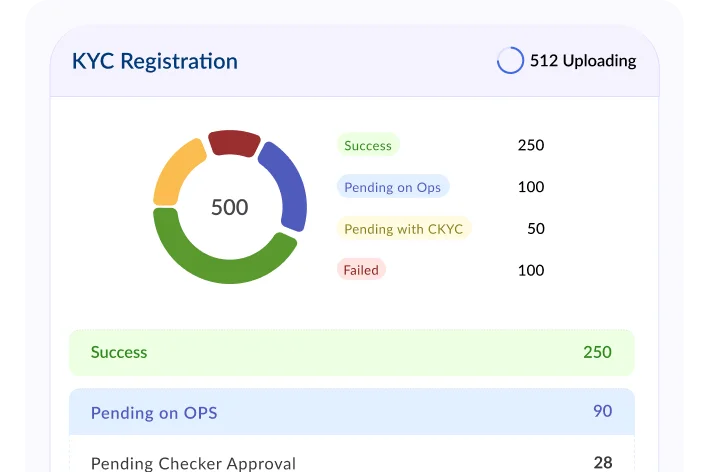
A best-in-class dashboard that provides end-to-end visibility with granular statuses.
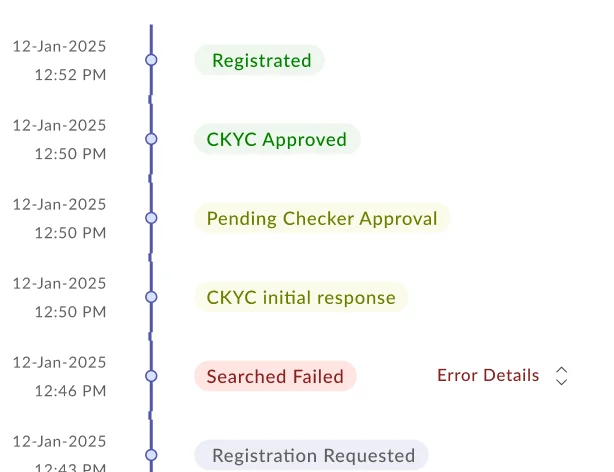
Complete data logging for every status update — know exactly where every record is stuck, not just “pending”.
Track success rate for each CKYC activity and manage failed cases.
Service Health Dashboard to detect any disruption in API or SFTP connectivity.
Configuration Management — update your CKYC credentials directly from the dashboard.
The Complete CKYC Platform.
The platform stays aligned to the latest CKYC standard automatically, so a new requirement never means a new project for your team.
CKYC 2.0 Built In
Create and update move from SFTP to real-time API, with no maker-checker approval process. Every submission runs through new identity, liveness, face-match, and document-tampering checks. Download using face authentication by capturing a selfie, and capture consent once per record per RE — reused for all later retrievals.
Live Updates, Smart Search & Download
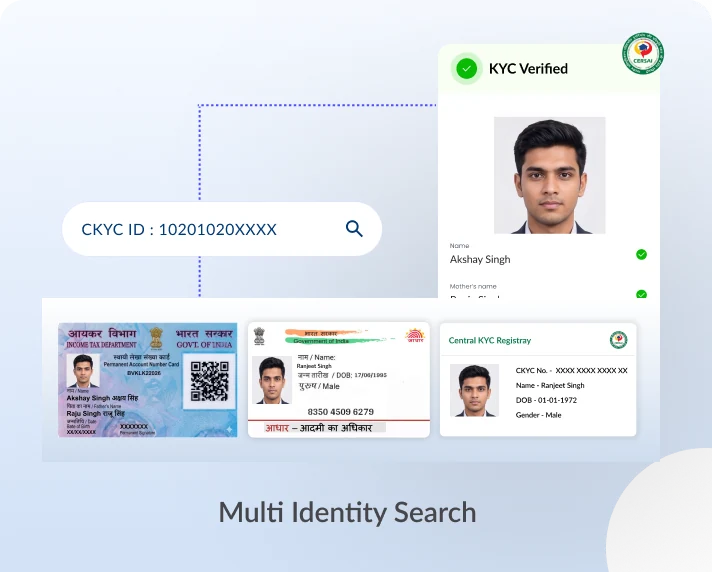
Know the moment another RE updates your customer's KYC, with the exact fields that changed — plus alerts on deceased / dissolved records and fraud-flagged accounts. Search using multiple ID numbers in a single request, get the customer image, and download without OTP.
Future-Proof & Enterprise-Ready
No recurring coding for every CKYC update. Built for enterprise scale — high volumes, backlog clearance, and workflow-led processing.
Why Teams Choose DigiCKYC
Compare how DigiCKYC simplifies CKYC workflows versus traditional approaches.
Questions About Staying in Control?
02
What are the genuinely new capabilities in CKYC 2.0?
Three changes stand out:
- Real-time Create/Update: APIs with no maker-checker flow (Upload needs an undertaking document).
- Face Authentication download: plus lifetime consent validity.
- Rebuilt security: mTLS, OAuth 2.0, JWE/JWS and RSA-OAEP-256 replace the old XML-signature model.
03
What has changed in Search?
- Individuals: three new search methods added.
- Legal Entities: document-ID search now spans PAN, GSTIN, LLPIN, CIN, DOI and Mobile; entity search by GSTIN/LLPIN/CIN and formation date is new.
- searchKey: responses return a stateful token (valid 15 days) that must be passed to the Create API to link a search to record creation.
- Results now include a wrapper with pagination (a search can return multiple candidates), and email is masked.
04
How does the new consent framework for Download work?
Three consent types are supported — OTP, PHYSICAL and FACEAUTH:
- Individuals: OTP on mobile and email (if linked); FaceAuth as backup where mobile/email exist; Physical verification where neither exists.
- Legal Entities: consent type not applicable, but OTP is required (validate step skipped).
- If a customer has no relation with the RE, they get an email/SMS and must act via ‘Public Access’ on the CKYC website (OTP + last 4 digits of Aadhaar) within 48 hours, else it auto-rejects.
05
What is ‘sticky’ or lifetime consent?
It is the most important Download behaviour change:
- Consent is obtained only once per CKYC record against an RE.
- Once consented, the initiate call returns consentCheck = true and you go straight to /download/get — no OTP, no re-consent.
- Re-pulling the same customer's record for a later product or refresh does not re-trigger the consent journey, saving time and friction.
06
How has Upload changed from the maker-checker model?
The API path now validates and processes inline — no separate checker stage:
- POST /create returns a status; POST /create/status returns Approved, Rejected or Probable_Match.
- On a probable match, POST /create/action resolves it in the same session (accept/reject candidates).
- x-idempotency-key ensures a retry never creates a duplicate; Update mirrors this flow.
Note: the real-time API path is new and avoids the maker-checker batch — but SFTP has not been removed.
07
How does Digio reduce the integration complexity of CKYC 2.0?
CKYCRR 2.0 exposes a dozen-plus endpoints; Digio collapses them into a small, stable interface with 2.0 support already built in — so moving to 2.0 is not a fresh build. Digio:
- Exposes one upload API for both create and update (runs search first, passes searchKey through automatically).
- Pushes outcomes over webhooks instead of polling.
- Surfaces unsolicited KYC-update notifications, reuses pre-existing data, and retries automatically on registry downtime.
08
Does Digio offer this on-premise and as a managed SaaS?
Yes — both:
- On-Premise (Docker): the RE runs the platform; Digio shares connectivity.
- Managed SaaS: Digio operates servers, databases, monitoring, zero-downtime upgrades and CKYC 2.0 migration — no DevOps needed.
- Data isolation: each RE's data is kept logically separate with its own credentials and access controls; CKYC content is encrypted, no sensitive data sits in the operational database, and all data stays in India.
- Network: secure, access-controlled connectivity with IP whitelisting.
09
What does CERSAI's advisory (CKYC/2025/10) mean when using a TSP?
The advisory (23 July 2025) followed complaints of unauthorized downloads and repeated updates caused by a vendor glitch. CERSAI stressed that a third-party service provider (TSP) acts at the RE's own risk — a glitch does not absolve the RE — and advised REs to:
- Exercise enhanced due diligence and oversight over their TSP.
- Review internal processes and access controls to prevent unauthorized access.
- Ensure compliance with information-security and data-access guidelines.
A well-architected TSP supports this with strong access controls, full audit logging and safeguards against duplicate transactions — but accountability always stays with the RE.
10
What are the benefits of CKYC — in cost and time — when onboarding customers?
CKYC (CERSAI's central repository) lets a customer's KYC be done once and reused, so only one entity does full KYC; others retrieve the verified record via the CKYC number.
- Time saved: onboarding becomes a lookup, not a document-collection cycle — near-real-time retrieval instead of days; real-time update alerts remove manual re-KYC drives.
- Cost saved: no duplicate document collection, data entry, verification or storage per RE; freed staff, less rework, lower compliance overhead.
With Digio, a single upload API, webhook status, sticky consent and data reuse compress this further.
Explore Digio's Other Solutions
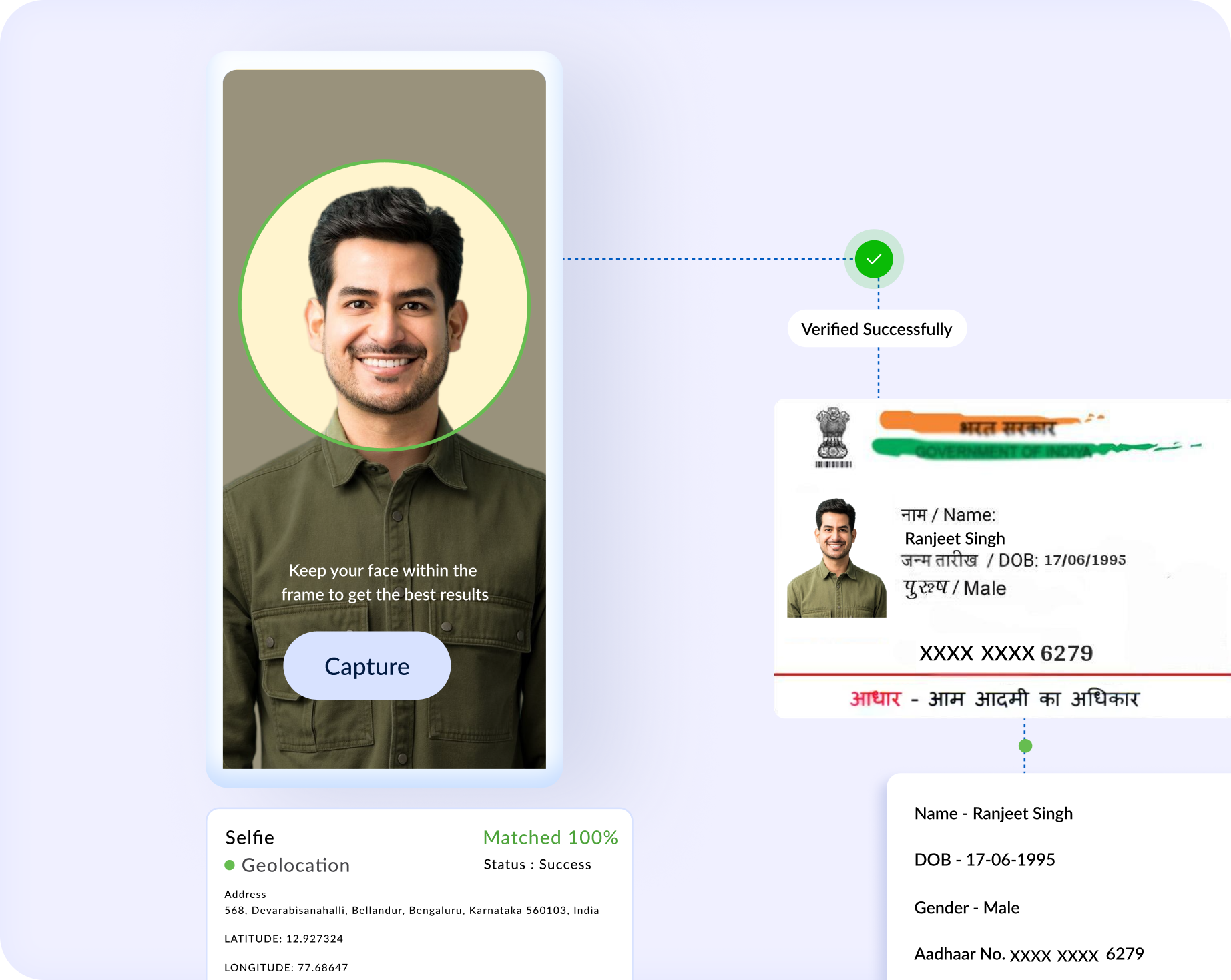
DigiKYC

Comprehensive Identity and Business Verification solution with Enhanced Due Diligence checks
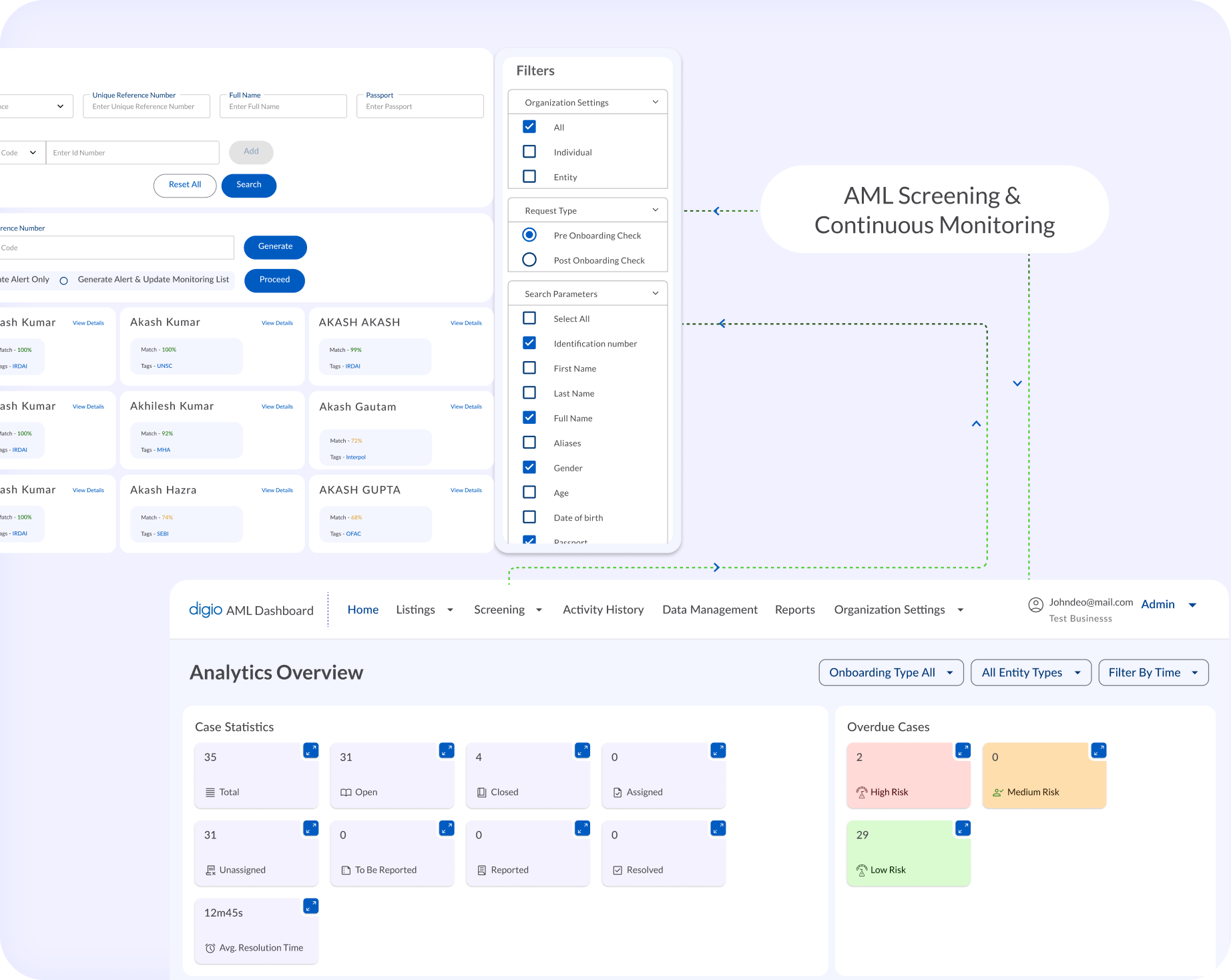
DigiShield


Intelligent screening and real-time monitoring ensure secure onboarding and compliance with regulatory standards, preventing inclusion on sanctions or embargo lists.
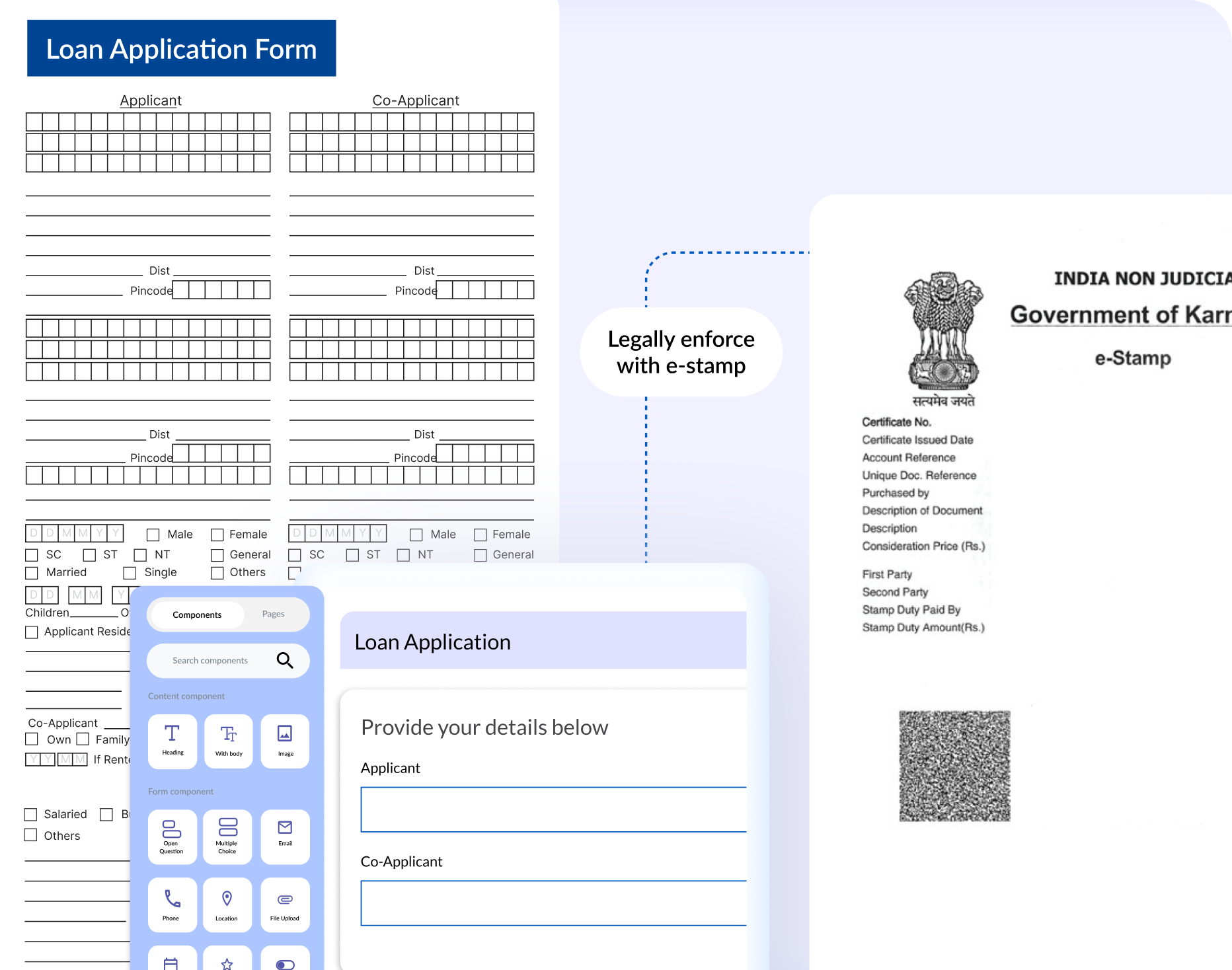
DigiDocs

All-Inclusive Platform for all your Document Creation and Management Needs
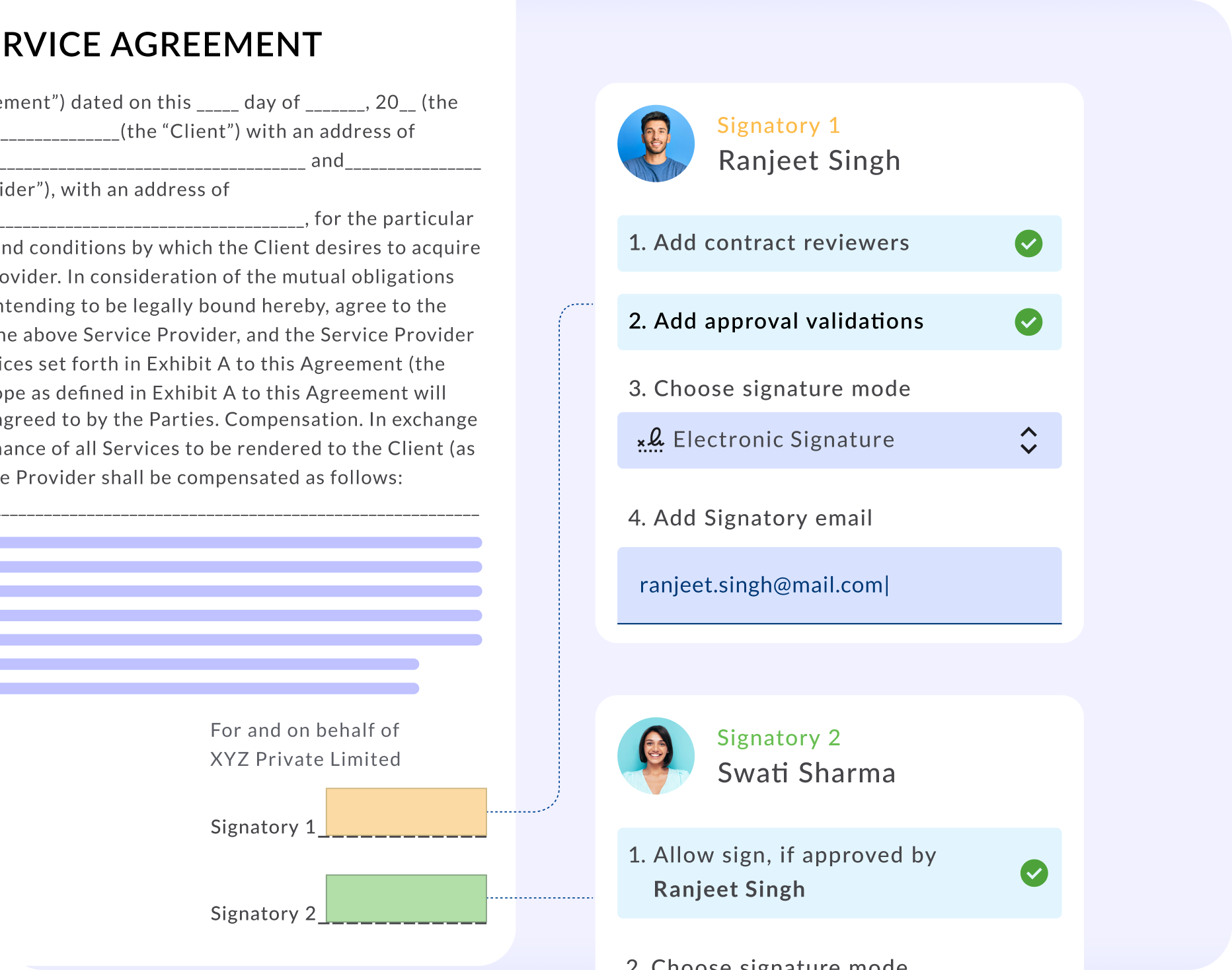
DigiSign

The Most Trusted Signing Solution in India, enabling you with highest configurability for digital signing
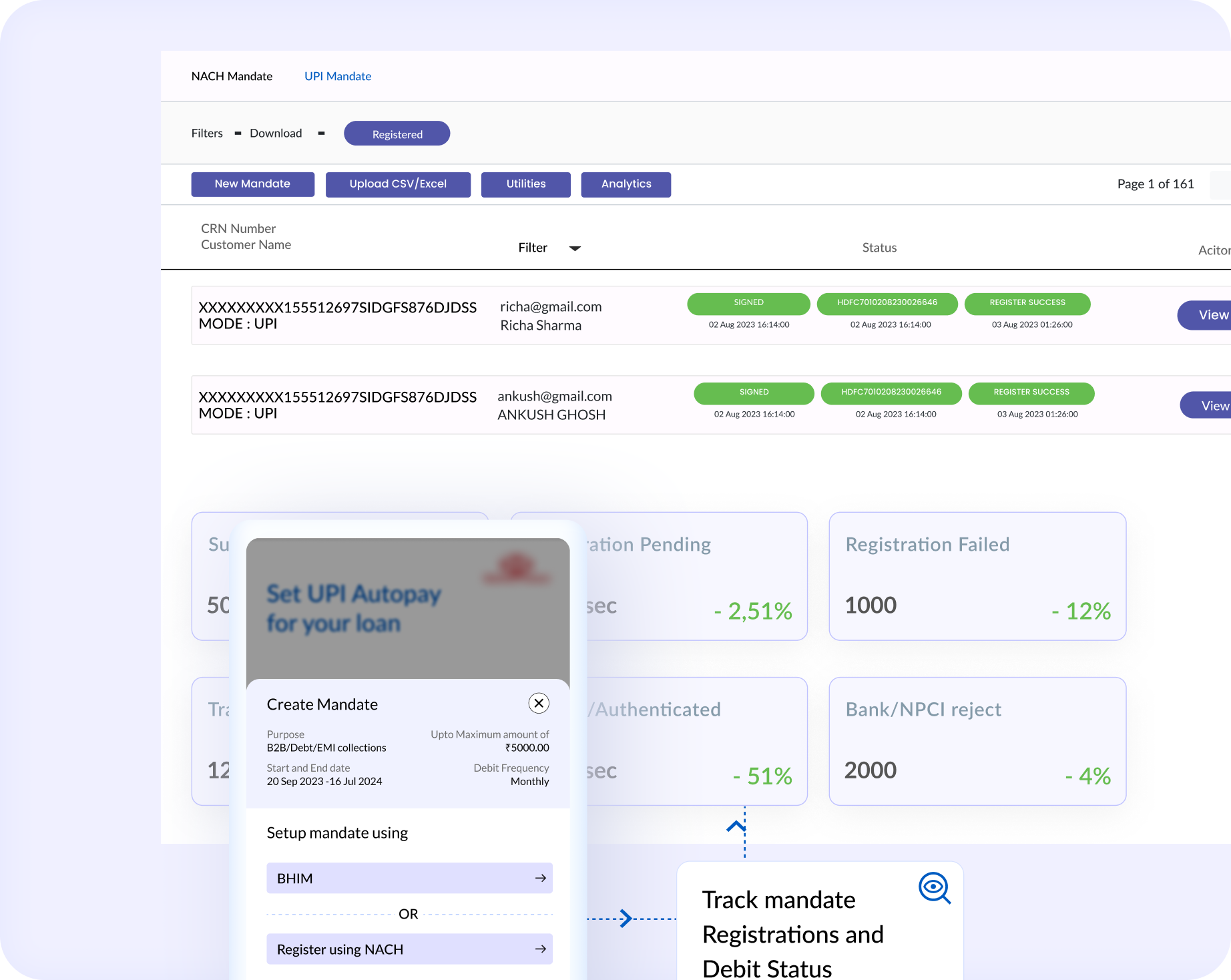
DigiCollect

Comprehensive Identity and Business Verification solution with Enhanced Due Diligence checks.
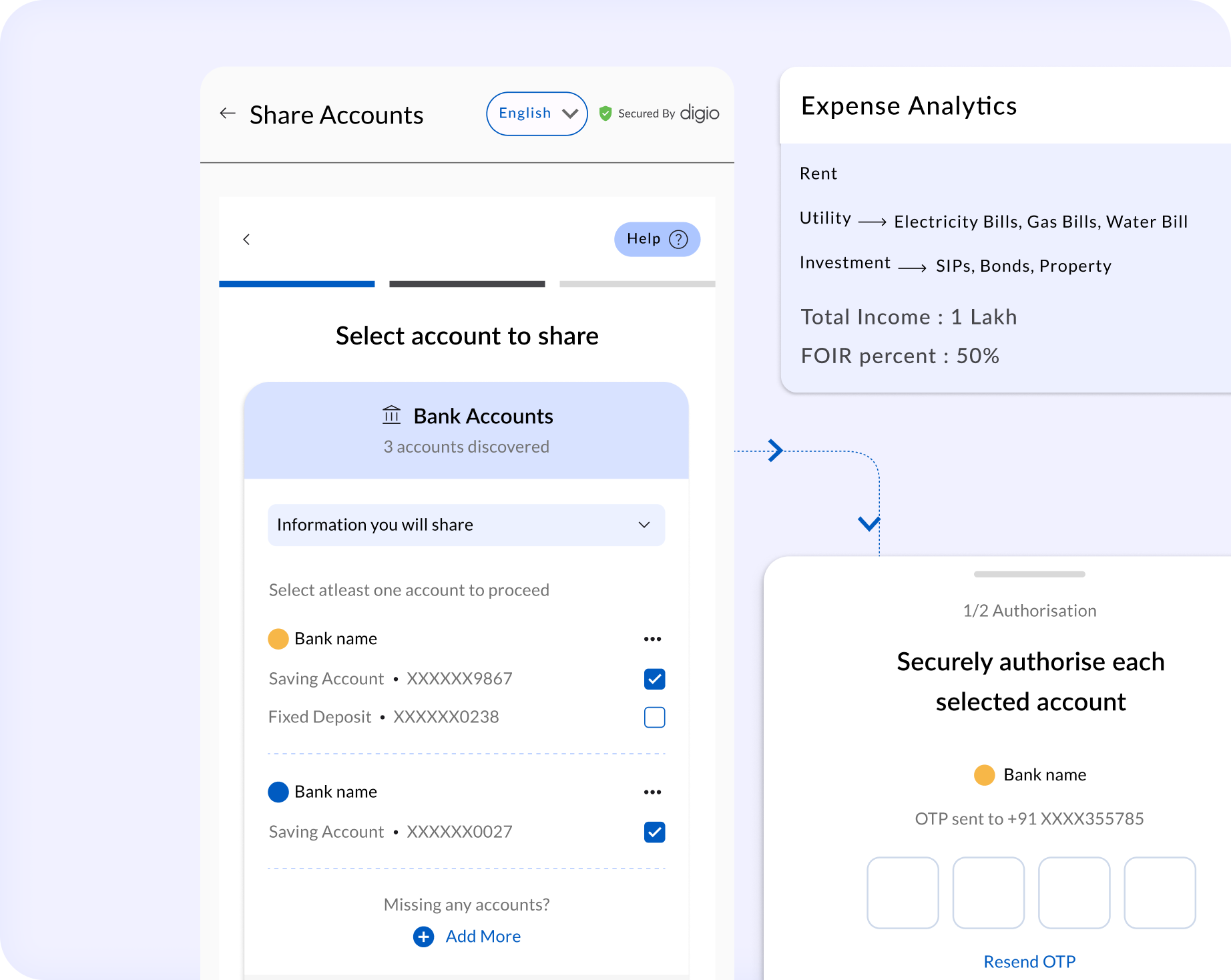

Account Aggregator, based on the user’s consent, securely and digitally shares information between financial institutions
DigiKYC
Comprehensive Identity and Business Verification solution with Enhanced Due Diligence checks
DigiShield
Intelligent screening and real-time monitoring ensure secure onboarding and compliance with regulatory standards, preventing inclusion on sanctions or embargo lists.
DigiDocs
All-Inclusive Platform for all your Document Creation and Management Needs
DigiSign
The Most Trusted Signing Solution in India, enabling you with highest configurability for digital signing
DigiCollect
Comprehensive Identity and Business Verification solution with Enhanced Due Diligence checks.
Account Aggregator, based on the user’s consent, securely and digitally shares information between financial institutions
Digitally transform business operations with Digio!
Try first. Subscribe later.
Boost your legal ops efficiency by 80%
Learn how Digio can enhance your business productivity
Get 1-on-1 business use case solutioning
Speak with our business consultants to get a solution walkthrough for your business requirement
Test the APIs
Let your development team test our API suite to understand configurability and product integration
Subscribe
Get the best in industry commercials for your business usecase