DPDP Compliance Platform: Complete Guide for Indian Enterprises (2026)
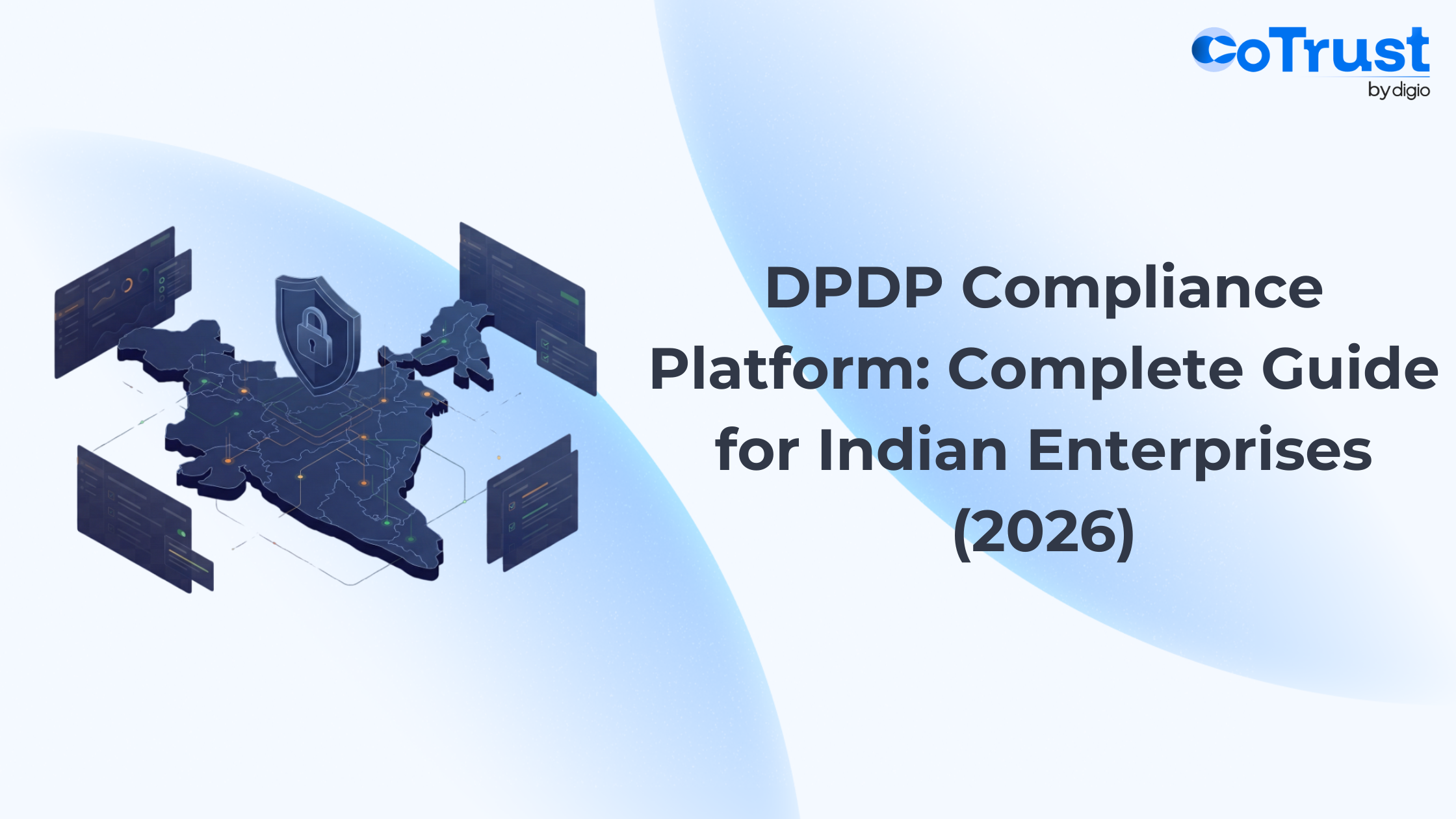
Everything Indian enterprises need to know about choosing a DPDPA compliance platform: features, deployment options, timelines, and penalties. Updated for 2026.
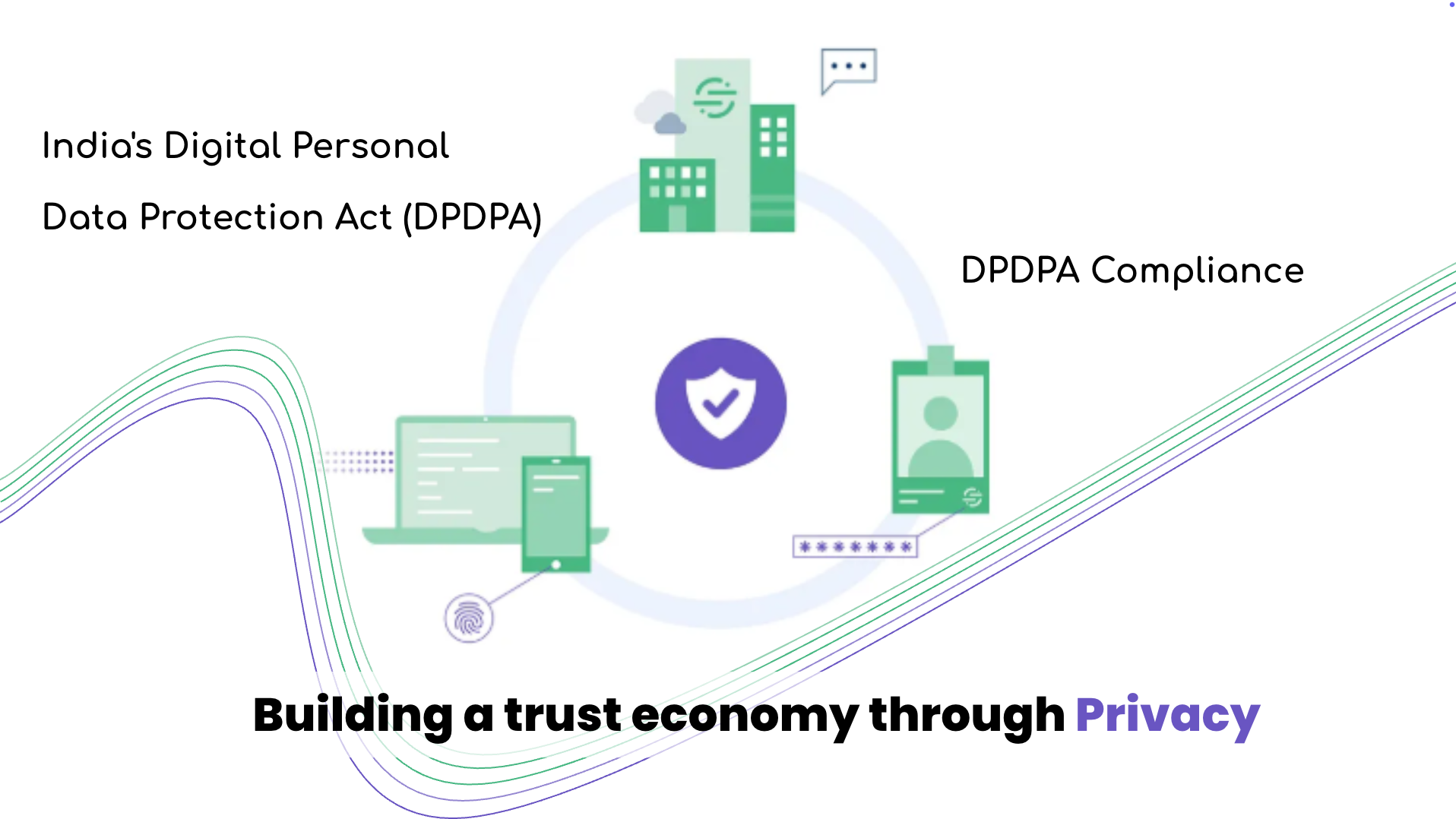
India's Digital Personal Data Protection Act (DPDPA) is no longer a future concern; it's an active enforcement reality. With the DPDP Rules 2025 already notified and full compliance mandated by May 13, 2027, every organisation processing personal data of Indian citizens needs a compliance platform in place. This guide breaks down what a DPDP compliance platform does, what features matter, how deployment models differ, and how to evaluate one for your organisation, whether you're a bank, NBFC, fintech, or enterprise.
What Is a DPDP Compliance Platform?
A DPDP compliance platform is a software system that helps organisations meet their obligations under the Digital Personal Data Protection Act, 2023, and the DPDP Rules, 2025. At its core, it manages the lifecycle of consent from capture to storage to withdrawal, while providing the audit infrastructure that regulators will demand.
Unlike generic privacy tools built for GDPR that are retrofitted for Indian regulations, a purpose-built DPDP compliance platform addresses India-specific requirements:
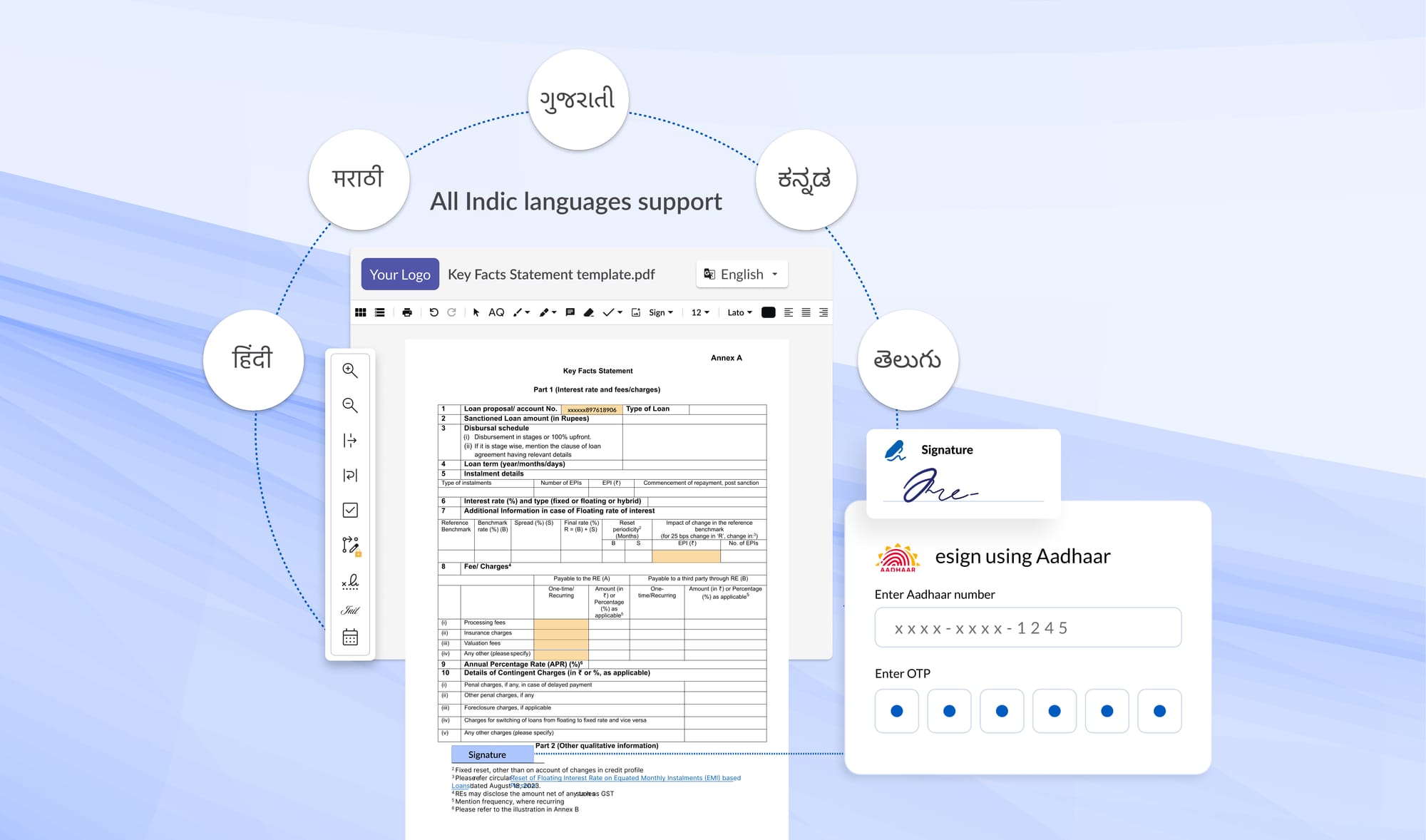
- Consent in 22 Indian languages (Section 5(3) — notices must be in all Schedule VIII languages)
- Affirmative consent capture with cryptographic proof (Section 6(1))
- One-click consent withdrawal with ease equal to giving consent (Section 6(4))
- Data Principal Rights (DPR) orchestration — access, correction, erasure, grievance (Sections 11-13)
- Breach notification within 72 hours to the Data Protection Board and affected individuals
- Immutable audit trail for regulatory review (Section 10(2))
DPDP Rules 2025: Timeline and Penalties
The DPDP Rules were notified on November 13, 2025, establishing a phased enforcement timeline:
DPDP Penalty Framework
- Up to ₹250 crore for failure to implement reasonable security safeguards
- Up to ₹200 crore for failure to notify the Board and affected individuals of a breach
- Up to ₹150 crore for non-compliance with obligations related to children's data
- Up to ₹50 crore for other violations
The cost of compliance is a fraction of the cost of non-compliance. A typical compliance platform costs ₹25-50 lakh per year. A single violation can cost ₹250 crore.
Key Features to Look For in a DPDP Compliance Platform
Not all compliance platforms are equal. When evaluating, focus on these capabilities:
1. Consent Lifecycle Management
The platform must capture, store, version, and enable withdrawal of consent with full traceability. Every consent artifact should be cryptographically hashed (SHA-256 or equivalent) so that any tampering invalidates the record.
Look for:
- Purpose-specific consent capture (no bundled consent)
- Consent versioning that proves exactly what notice was shown to User X on Date Y
- Real-time consent status API for downstream systems
- Offline consent digitisation (for paper/physical consent forms)
2. Privacy Notice Builder
Section 5(1) requires clear, standalone privacy notices before consent.
The platform should offer:
- No-code visual builder with branding controls
- 22 Indian language support (auto-translation or manual)
- Template versioning with change summaries
- SDK generation for web and mobile deployment
3. Data Principal Rights (DPR) Orchestration
Sections 11-13 grant individuals the right to access, correct, erase, and file grievances about their data. The platform should automate:
- Rights request intake (web portal, email, API)
- Workflow routing to internal teams with SLA tracking
- Identity verification before fulfilling requests (OTP, App Token)
- Automated erasure execution across connected data stores
4. Immutable Audit Trail
For Section 10(2) audit readiness, the platform must maintain:
- WORM (Write Once, Read Many) storage for all consent events
- Exportable audit records in standard formats (JSON, CSV, PDF)
- Tamper-evident logging — cryptographic hash chain
5. Deployment Flexibility
Indian banks and regulated entities often require on-premise deployment for data residency.
The platform should support:
- SaaS (cloud-hosted) for fast deployment
- On-premise/private cloud for data sovereignty
- Hybrid models
6. Data Discovery & Security Posture (DSPM)
Advanced platforms integrate data discovery to automatically scan connected databases, classify PII, and map data flows. This goes beyond consent management into enforcement. When a user revokes consent, the system can actually execute deletion across 50+ connected databases.
SaaS vs On-Premise: How to Choose
Recommendation: Start with SaaS for rapid go-live. Migrate to on-premise later if regulatory mandates require it. Most platforms support this migration path.
How to Evaluate a DPDP Compliance Platform
Use this checklist when evaluating vendors:
- DPDPA-specific vs GDPR-retrofitted: Was the platform built for Indian regulations or adapted from a global tool? India-specific requirements (22 languages, consent artifacts, DPB notification) are often missing in retrofitted tools.
- Deployment options: Can it deploy on your infrastructure? This is non-negotiable for banks.
- Integration complexity: How long to integrate with your existing systems? Look for SDKs (React, Angular), REST APIs, and webhook support.
- Consent-to-execution: Does it only capture consent, or can it actually enforce it? When a user revokes consent, does the system stop data processing across your infrastructure?
- Pricing model: Per-DP/month, per-event, or per-profile? Understand how costs scale with your data principal volume.
- Proof of production: Is the platform live with customers in your industry? Ask for case studies.
- Security certifications: SOC 2, ISO 27001, field-level encryption, WORM audit logs.
Explore CoTrust: DPDPA Consent Management Platform by Digio
Frequently Asked Questions
Q: What is the best DPDPA compliance platform in India?
A: The best platform depends on your organisation's size, industry, and deployment requirements.
For banks requiring on-premise deployment, look for platforms with proven banking deployments and field-level encryption.
For fintechs needing rapid integration, prioritise API-first platforms with SDK support.
Key factors: DPDPA-specific design (not GDPR-retrofitted), 22 language support, consent-to-execution capability, and deployment flexibility.
Q: How much does a DPDPA compliance platform cost?
A: Costs vary by deployment model and data principal volume.
SaaS models typically range from ₹15-40 lakh per year, depending on the number of data principals.
On-premise deployments range from ₹28-80 lakh per year plus a one-time setup fee of ₹5-10 lakh.
Most platforms also charge for implementation/integration separately. Compare this against potential penalties of up to ₹250 crore for non-compliance.
Q: What is the deadline for DPDPA compliance?
A: The DPDP Rules 2025 establish a phased timeline.
Phase 1 (November 2025) activated governance rules. Phase 2 (November 2026) opens Consent Manager registration. Phase 3 (May 13, 2027) is the full enforcement deadline — all consent systems, privacy notices, security safeguards, breach protocols, and DSR infrastructure must be operational.
Penalties up to ₹250 crore apply from this date.
Q: Can DPDPA compliance platforms be deployed on-premise?
A: Yes, several India-built platforms support on-premise or private cloud deployment.
This is particularly important for scheduled commercial banks and entities under RBI regulation that require full data residency within their own infrastructure.
On-premise deployment ensures all consent records, audit logs, and personal data remain within the organisation's perimeter. Typical setup takes 4-8 weeks with dedicated deployment support.
This content is for informational purposes and does not constitute legal advice. Consult qualified legal professionals for advice specific to your circumstances.
Read more Blogs
DPDP Consent Management: What Every Data Fiduciary Must Know in 2026
How DPDP consent management works: consent capture, lifecycle, consent managers, and what data fiduciaries must implement before May 2027.
DPDP Compliance Platform: Complete Guide for Indian Enterprises (2026)
Everything Indian enterprises need to know about choosing a DPDPA compliance platform: features, deployment options, timelines, and penalties. Updated for 2026.
DPDP Compliance for Banks: A CISO's 90-Day Roadmap
Indian banks sit at the intersection of two regulatory forces: the Reserve Bank of India's Data Governance Guidelines and the Digital Personal Data Protection Act, 2023. With full DPDPA enforcement beginning May 13, 2027, and penalties reaching ₹250 crore, banks face the highest compliance stakes of any sector. The challenge isn't just regulatory, it's operational. Banks handle tens of millions of data principals across dozens of digital properties (mobile apps, net banking, UPI, loan portals,

Digitally transform business operations with Digio!
Try first. Subscribe later.
Boost your legal ops efficiency by 80%
Learn how Digio can enhance your business productivity
Get 1-on-1 business use case solutioning
Speak with our business consultants to get a solution walkthrough for your business requirement
Test the APIs
Let your development team test our API suite to understand configurability and product integration
Subscribe
Get the best in industry commercials for your business usecase