CKYCRR 2.0 is going live this monthAutomate your CKYC end-to-end todayExplore
Digitization of Business Forms: The India Story
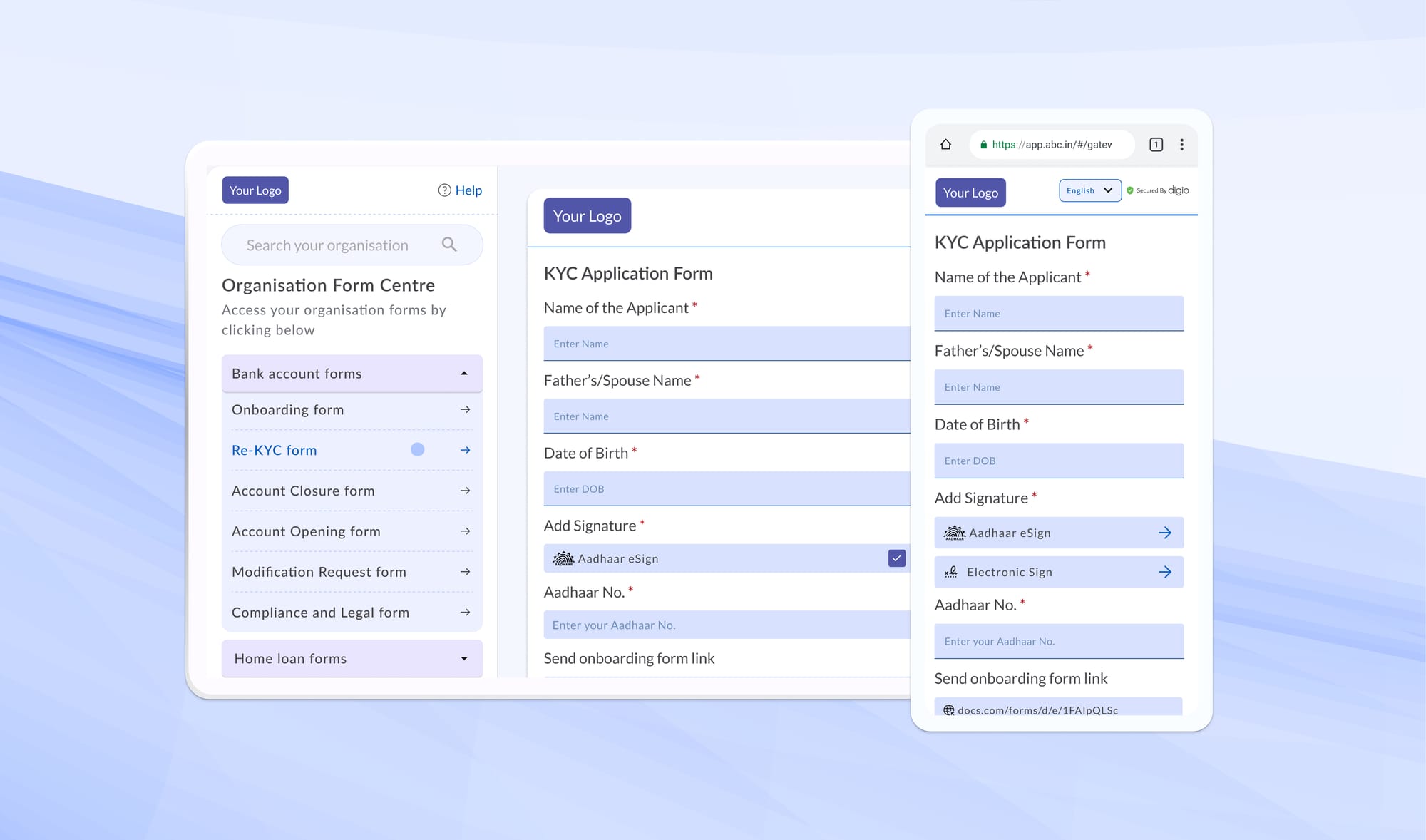
India’s digitization journey has been monumental, impacting nearly every aspect of governance, business, and public services. Business Forms continue to play a crucial role in banking, governance, and service delivery across the country.
India’s digitization journey has been monumental, impacting nearly every aspect of governance, business, and public services. Over the last decade, technological advancements have introduced transformative initiatives such as the Aadhaar system, DigiLocker, Unified Payments Interface (UPI), Account Aggregator and a suite of other Digital Public Infrastructure (DPI) solutions. However, despite these innovations, one component remains stubbornly persistent: Business forms.
Forms—whether digital or physical—continue to play a crucial role in banking, governance, and service delivery across the country. Despite India’s digital aspirations, forms have remained one of the slowest business processes to evolve, especially in terms of user experience and system integration. Digital forms aspire to automate all the steps from creation, filling to data submission via online modes.
The Legacy of Paper Forms in India’s Financial Sector
Forms have long been the backbone of service delivery in banking and business.
Indian banks and other financial services providers, which deal with millions of customer interactions every day, have historically relied on physical forms for services like loan applications, account opening, and KYC compliance. Despite the introduction of e-KYC and other digital initiatives, firms continue to rely on paper-based forms along with digital forms, leading to inefficiencies and data processing delays. Although most of these forms tend to be available online, they are typically filled out manually, submitted physically, and processed through slow-moving workflows that rely on paper trails. Regulatory compliance, legacy systems, and risk aversion to change are cited as the primary reason for slow adoption.
Banks are considered the biggest influencers in the Indian financial sector, other businesses view banks as the model of compliance and operational standards. Given limited user adoption, dependence on legacy systems and regulatory burden, they have had to maintain this duopoly of paper-based and digital forms, which often creates a slow, people-based operational process. Given their scale and influence on the economy, other businesses such as insurance, telecom, healthcare, real estate and public utilities, have adopted similar paper-based processes.
While adoption of business forms remains low, citizens will need to remain hopeful that instant gratification of filling a form and getting an instant response is not too far.
Why Forms still remain complex?
1. Inflexible Back-End Infrastructure
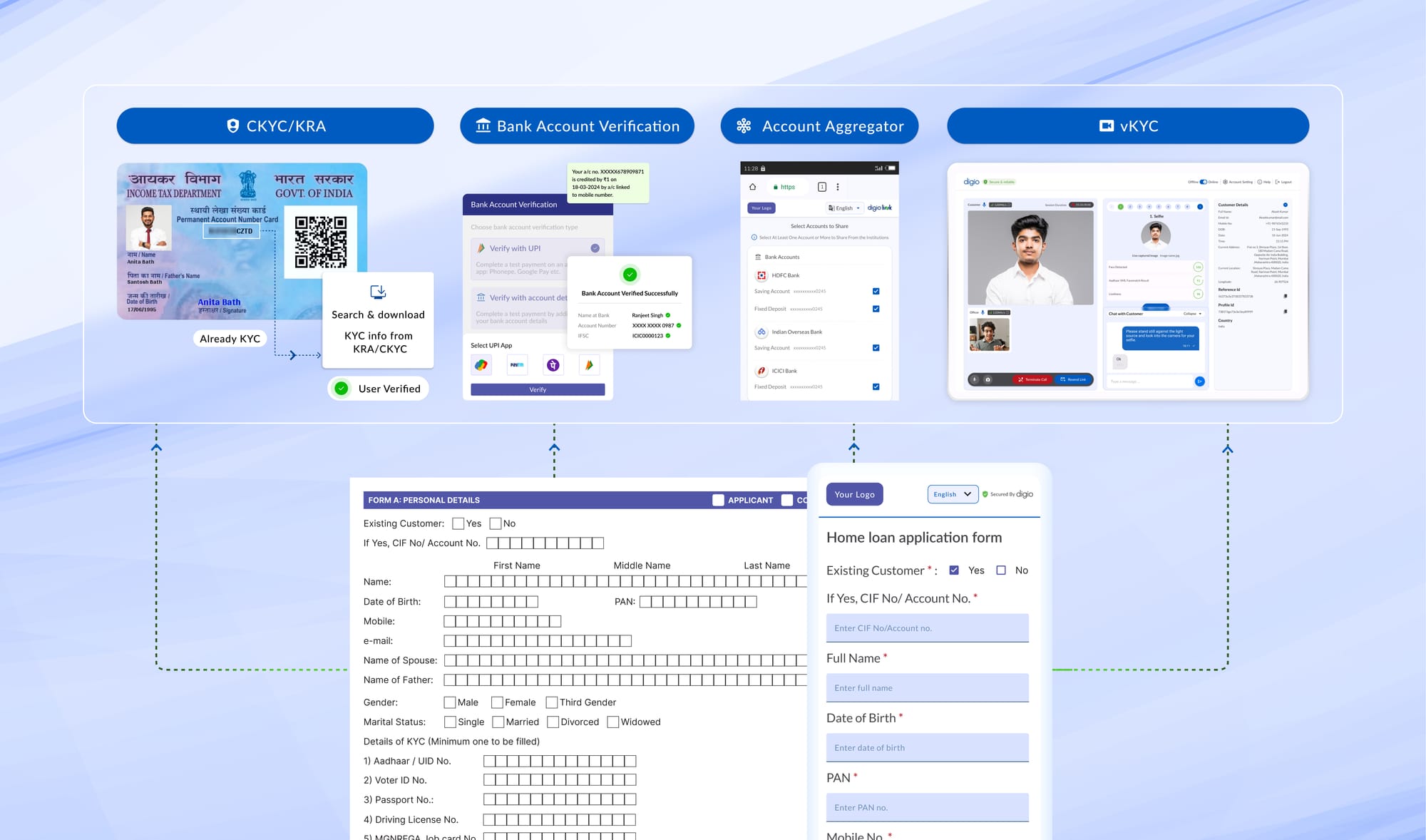
A traditional core banking system (CBS) requires forms to capture information in specific formats, leading to forms that are cluttered with character boxes and rigid input fields. These forms need to conform to the back-end system's data structure, which often dates back years, if not decades.
2. Compliance and Regulatory Rigor
For instance, the process of applying for a business loan still requires numerous forms related to financial history, income tax details, and collateral documentation. While DPI allows for some automation (e.g., Account Aggregator), these requirements still need paper-based documentation.
3. Lack of Interoperability
There exists a lack of interoperability between newer digital solutions and legacy systems which leads to inefficiencies, where forms are manually processed or require duplicate inputs. Even when we look at the KYC onboarding process where although a customer’s Aadhaar details can be fetched using e-KYC, a bank might still require separate documentation for proof of address, income, and photograph, largely due to back-end systems that do not communicate seamlessly with DPI.
4. Form Digitalisation Process
Most firms require collaboration across multiple teams both for creation of new forms and for digitisation of old forms. While product and technology teams are responsible for developing and digitalisation efforts, it still requires inputs from business, marketing and legal teams to confirm the contents and usability of the forms.
5. Lack of User Adoption
Anecdotal evidence suggests people tend to overlook and at times not understand instructions; and prefer assisted journeys, primarily slowing down the adoption of business forms. Also digital forms do not allow people to edit a submitted form, making it difficult for people to accept this digital method.
Why India Hasn’t Fully Transitioned from Paper to Digital
Despite the availability of Digital Public Infrastructure (DPI), India has struggled to move away from paper forms. The reasons for this are multifaceted but at a stakeholder level there are 2 fundamental concerns
1. Resistance to Change
Many organizations are resistant to fully digitizing their processes due to entrenched habits and fear of disrupting existing workflows. The transition to digital is often viewed as costly and time-consuming, particularly when many employees are more familiar with paper-based workflows.
2. Security gaps
There is still a perception, especially in the financial sector, that physical documentation provides a level of security and auditability that digital forms might lack. Businesses are often concerned about cybersecurity, data breaches, or errors in digital forms that might compromise sensitive information.
Where Forms Sit in the Business Digital Stack
Here is a simplified diagram that demonstrates where forms sit in a firm’s system:
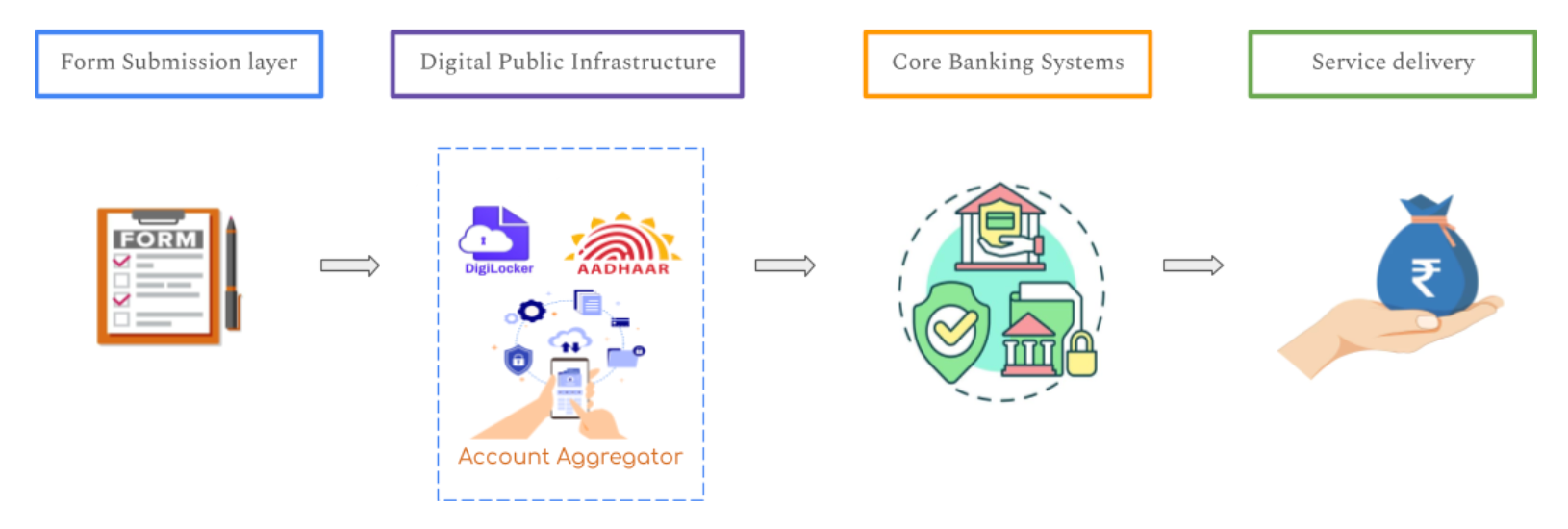
As can be seen, Forms act as the input layer, taking user information and passing it through a combination of DPI tools and legacy systems before resulting in actual service delivery. Friction in the first step can deter customers from proceeding further in the onboarding journey.
From a business perspective, 2 out of 3 people engaging with complex forms with long sentences, technical terms, and unclear instructions tend to abandon it, given the majority of our population still faces limited literacy, especially in English. This translates to higher customer servicing costs and increased need for customer support.
Bridging Legacy Systems and Digital Transformation
One of the biggest challenges businesses face when transitioning to digital forms is the process of converting paper-based forms to digital forms and existing reliance on legacy systems. These systems are often not built to handle modern, flexible data formats, requiring inputs in a structured format that looks very similar to traditional paper forms. Replacing these legacy systems can be expensive, time-consuming, onerous, and risky for organizations that rely on them for mission-critical processes.
Recognizing these challenges, Digio adopted a hybrid approach to digital forms, bridging the gap between modern digital experiences and the demands of legacy systems. This hybrid approach maintains the layout and structure required by legacy systems while offering all the advantages of digitization.
Key Aspects of Digio’s Hybrid Approach:
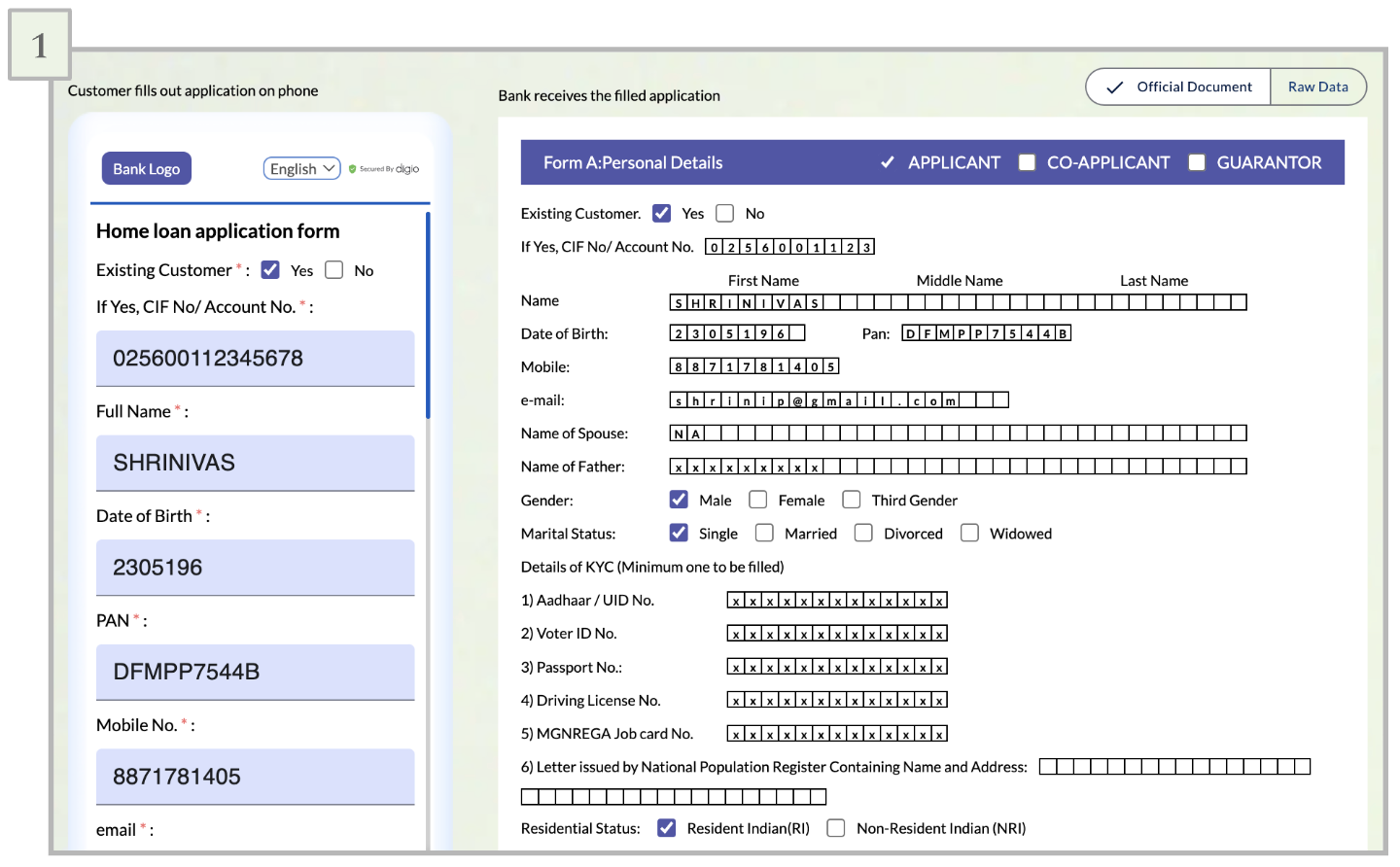
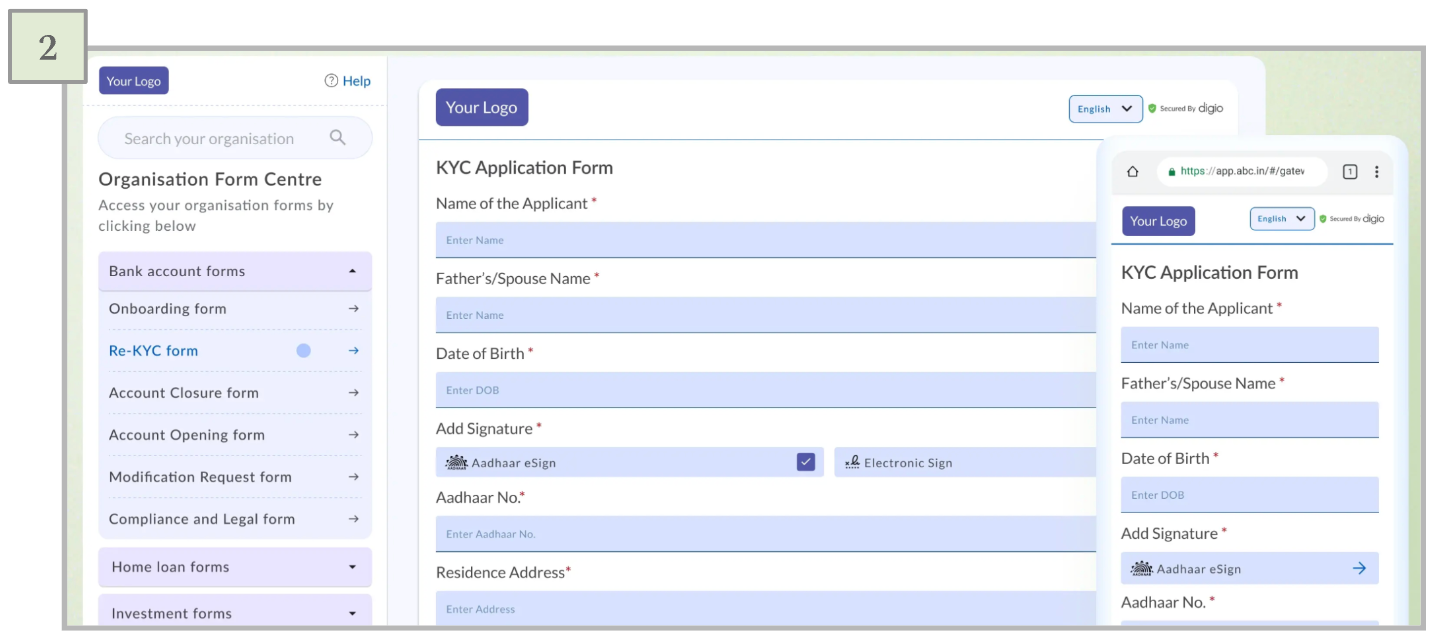
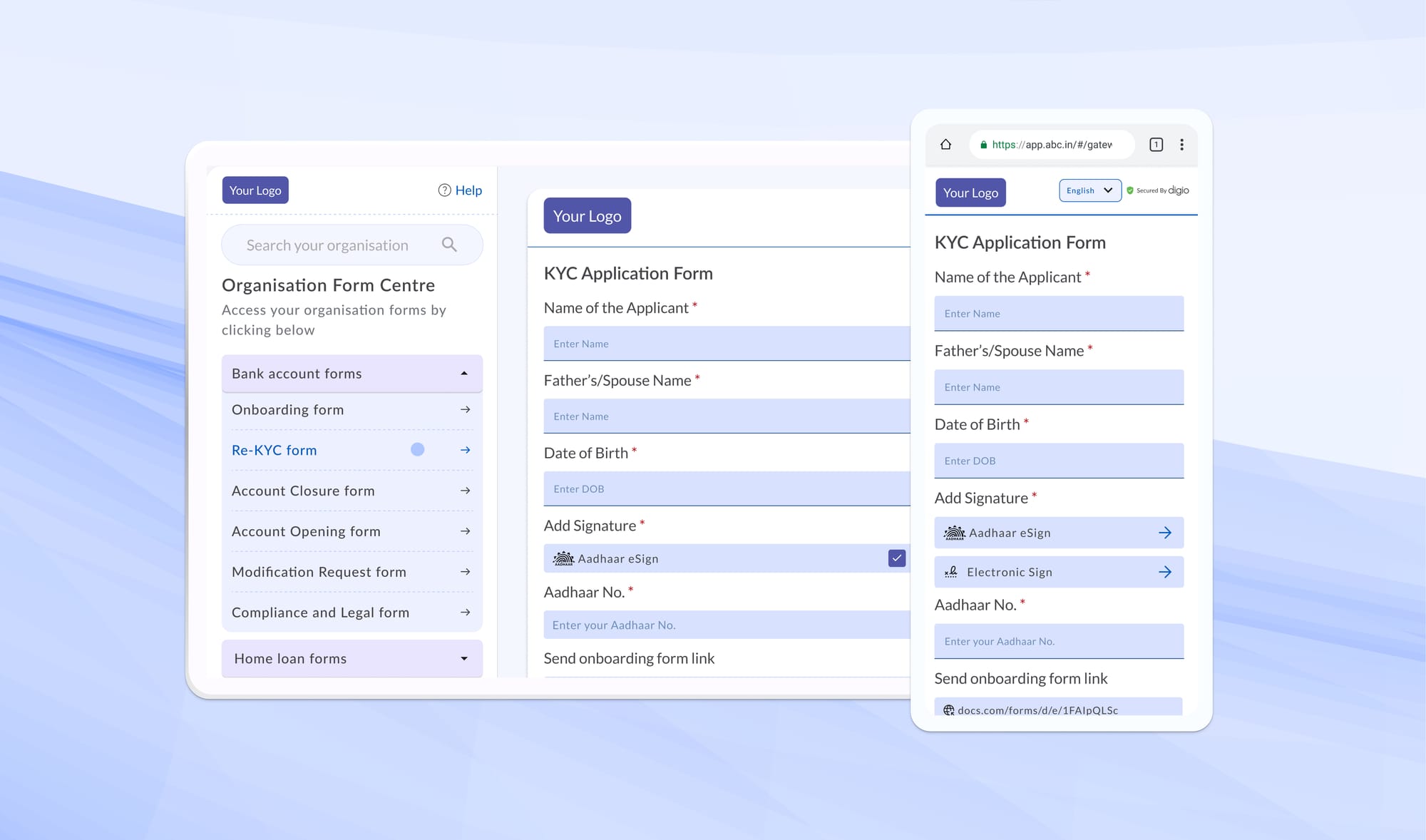
- Digitized Form Layouts: Digio’s solution digitizes the form layout while maintaining the familiar structure that legacy systems require. This ensures that businesses can transition to digital forms providing a clean and intuitive user experience.
- Structured Data for Legacy Systems: While the form is digitized for customer ease and operational efficiency, the output is still filled in a structured format1 that legacy systems can consume. This ensures that the data integrity and formatting required by older systems are maintained.
- No Disruption to Existing Workflows: Digio’s approach minimizes the disruption caused by transitioning from paper to digital by preserving the workflows already in place. This is especially important for industries where legacy systems are deeply embedded and mission-critical.
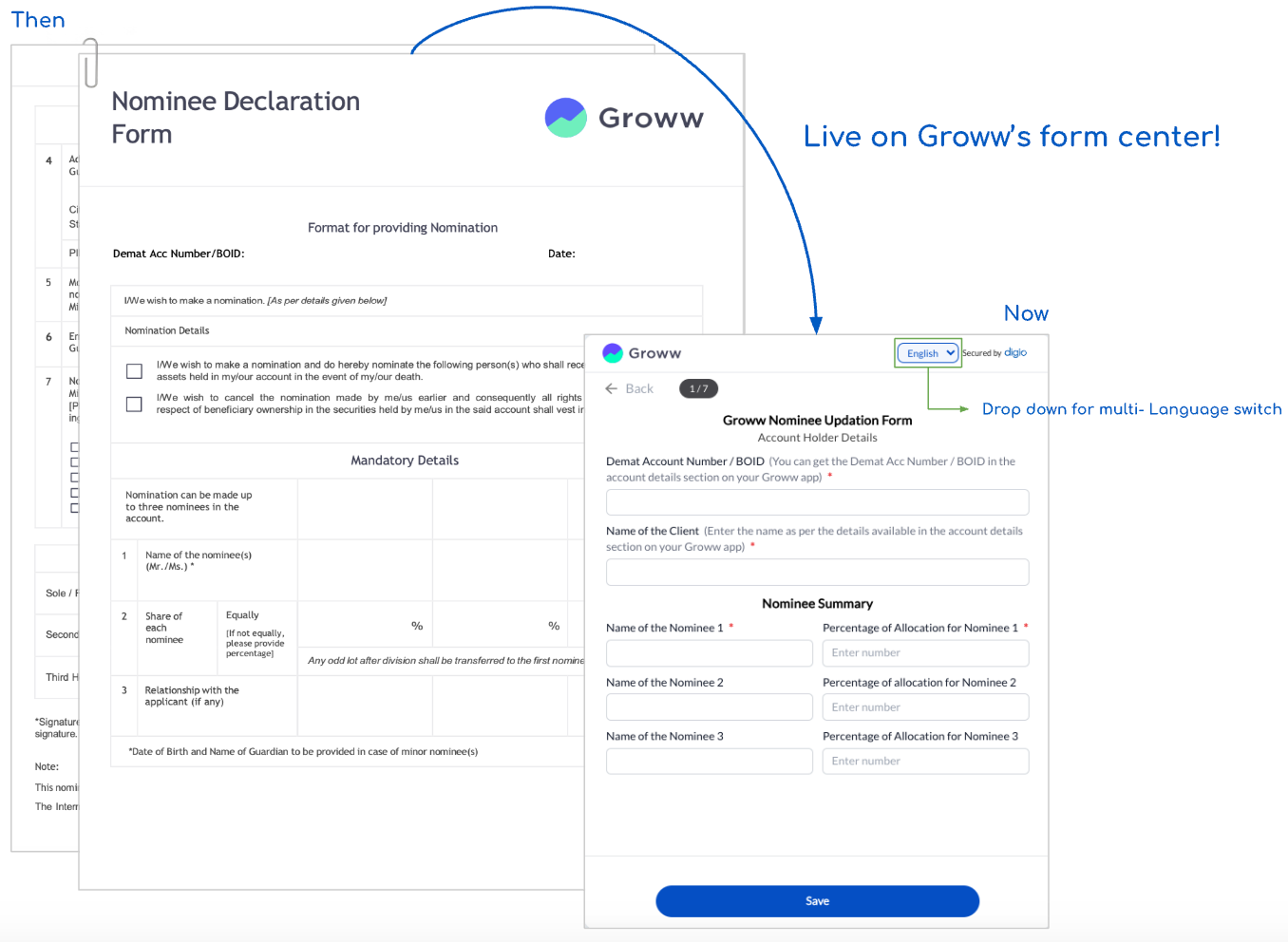
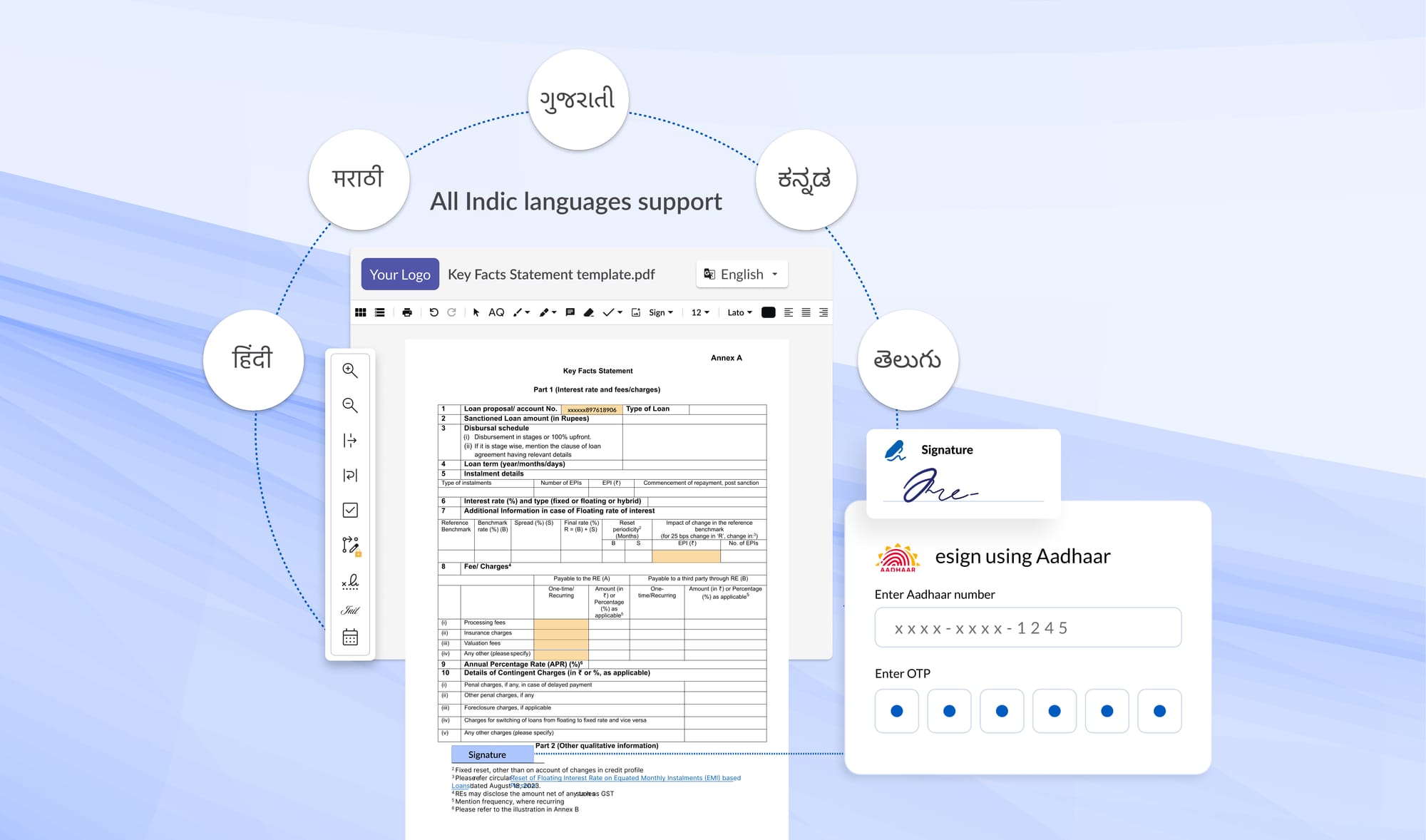
- Multi-lingual Support for maximum coverage: Businesses can allow customers to choose their preferred language to easily comprehend the details of the form. This allows a business to quickly go live in any region without the need for extensive investment in customer operations while catering to a much larger segment of users.
- Ease of Distribution: Businesses can easily share their customer forms via widely used messaging services such as sms, whatsapp and can also be easily hosted either on the customer onboarding journey or their website, digitizing their form centre2 entirely.
- Integrable with DPI and other digital workflows: Validation/ pre-filling of information via digilocker/Aadhar, eSigning via DigiSign and payments via UPI can be customized within the form journey. This allows businesses to deliver a seamless user experience and fast turnaround for service delivery.
.
Use cases where Form Digitization can Unlock Efficiency
Digitizing forms is critical to enhancing business efficiency. By integrating digital forms with DPI and automating the backend workflows, businesses can streamline processes, reduce errors, and speed up service delivery. Here are some key use cases where form digitization can have a significant impact:
1. Bank Account Opening
- Digital forms, integrated with e-KYC and DigiLocker, can auto-fill and verify data instantly, reducing the process from days to minutes.
2. Insurance Claims
- A digital claims form can automatically pull necessary documents from DigiLocker, reducing manual uploads and verification times.
3. Country Visa Applications
- A unified digital form can fetch identity details via Aadhaar and eliminate repetitive data entry, speeding up the visa approval process.
4. Education Admissions
- Digital admission forms integrated with DigiLocker can instantly pull verified certificates and academic records, streamlining the application process.
5. Utility Connections (Gas, Water, Power)
- Digital forms for utilities, connected with e-KYC and UPI, can streamline verification and payment, reducing approval times and customer effort.
Case Study : Digitizing Groww’s paper based form journeys
Conclusion: The Future of Digital Forms in India’s Growth
As India continues its journey toward a fully digitized economy, the role of digital forms cannot be overstated. With the right infrastructure in place—backed by DPI and a hybrid approach to legacy systems—digital forms can unlock unprecedented levels of efficiency, compliance, and customer satisfaction. Businesses can experience larger scale, reduce time to deliver and provide an enhanced customer experience which are key levers to grow in a rapidly growing economy.
Even the Government, in its Digital India mandate, has recently taken note of forms as a problem statement in its governance and service delivery roadmap.
Want to see how our solutions can transform your existing forms? Reach out to us on BD@digio.in or Support@digio.in to know more or test our APIs!
Read more Blogs
Building the Data Protection and Consent Infrastructure for GFF 2026
As Official Data Protection & Consent Partner for GFF 2026, Digio uses CoTrust to deliver localised, tamper-proof consent, cookie management and privacy workflows at scale.
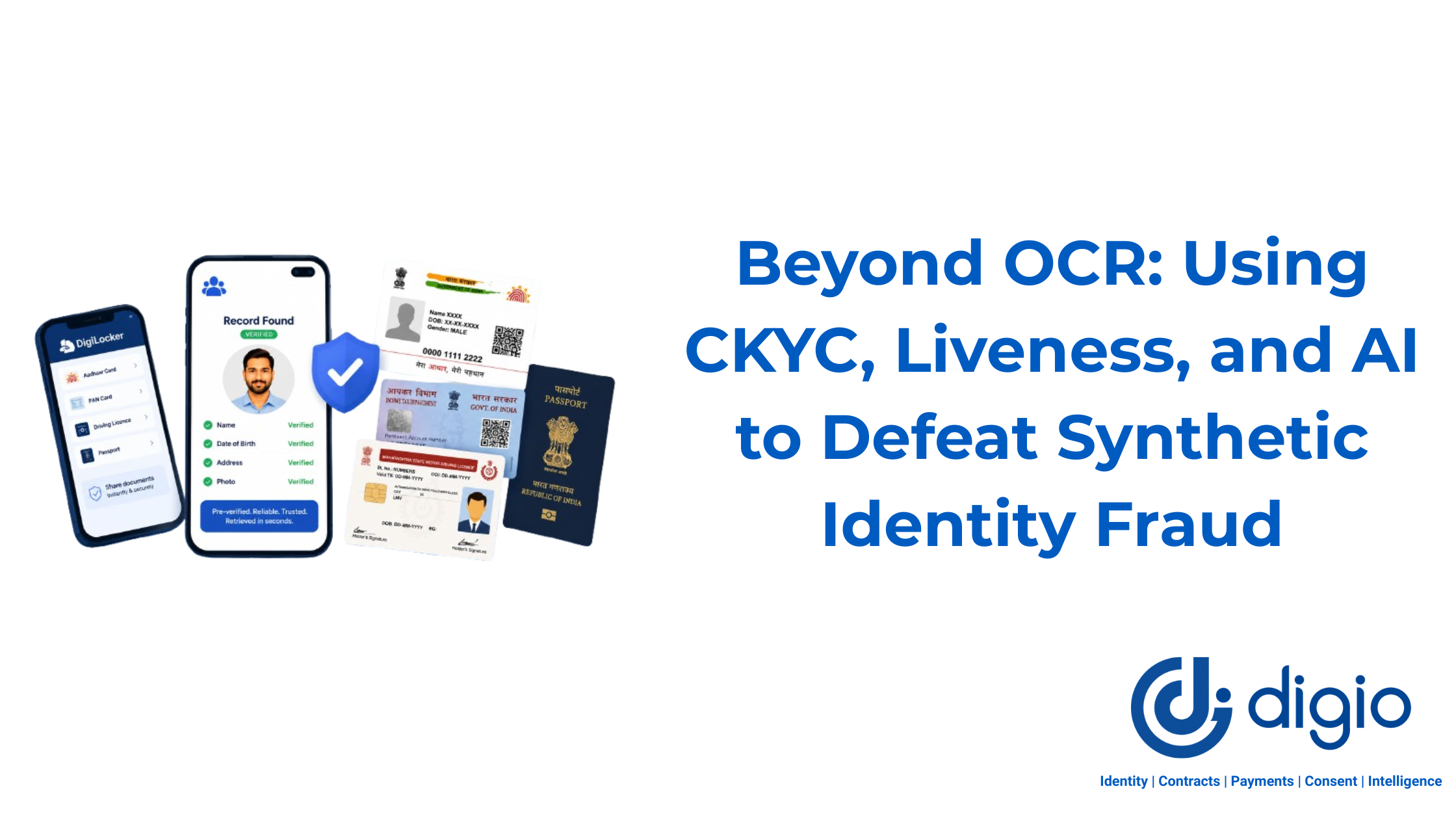
AI, CKYC, and The Future of Identity Rails
India’s CKYC registry holds 1B+ verified identities, yet many lenders still use OCR-only ID checks. Digio combines CKYC, liveness, face match, and AI forgery checks into one fraud-proof flow.
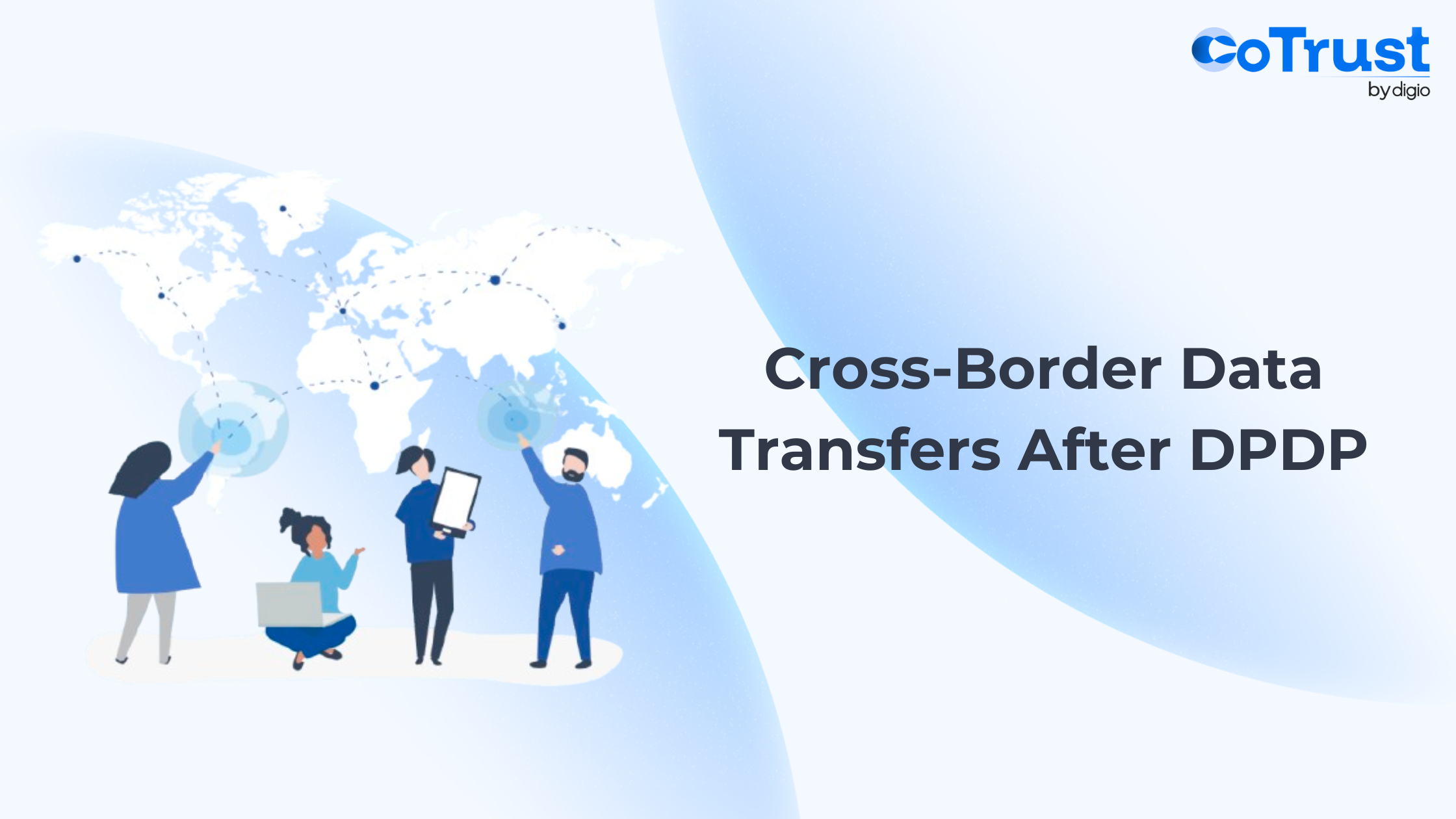
Cross-Border Data Transfers After DPDP: A Practical Guide
India’s Digital Personal Data Protection Act, 2023 (DPDPA) allows cross-border data transfers by default. This blog explains Section 16, where RBI and SEBI override DPDPA flexibility, and why consent notices, transfer disclosures, and offshore vendor contracts now matter operationally.



Digitally transform business operations with Digio!
Try first. Subscribe later.
Boost your legal ops efficiency by 80%
Learn how Digio can enhance your business productivity
Get 1-on-1 business use case solutioning
Speak with our business consultants to get a solution walkthrough for your business requirement
Test the APIs
Let your development team test our API suite to understand configurability and product integration
Subscribe
Get the best in industry commercials for your business usecase