Aadhaar: The Rule of Thumb for Identity Verification in India
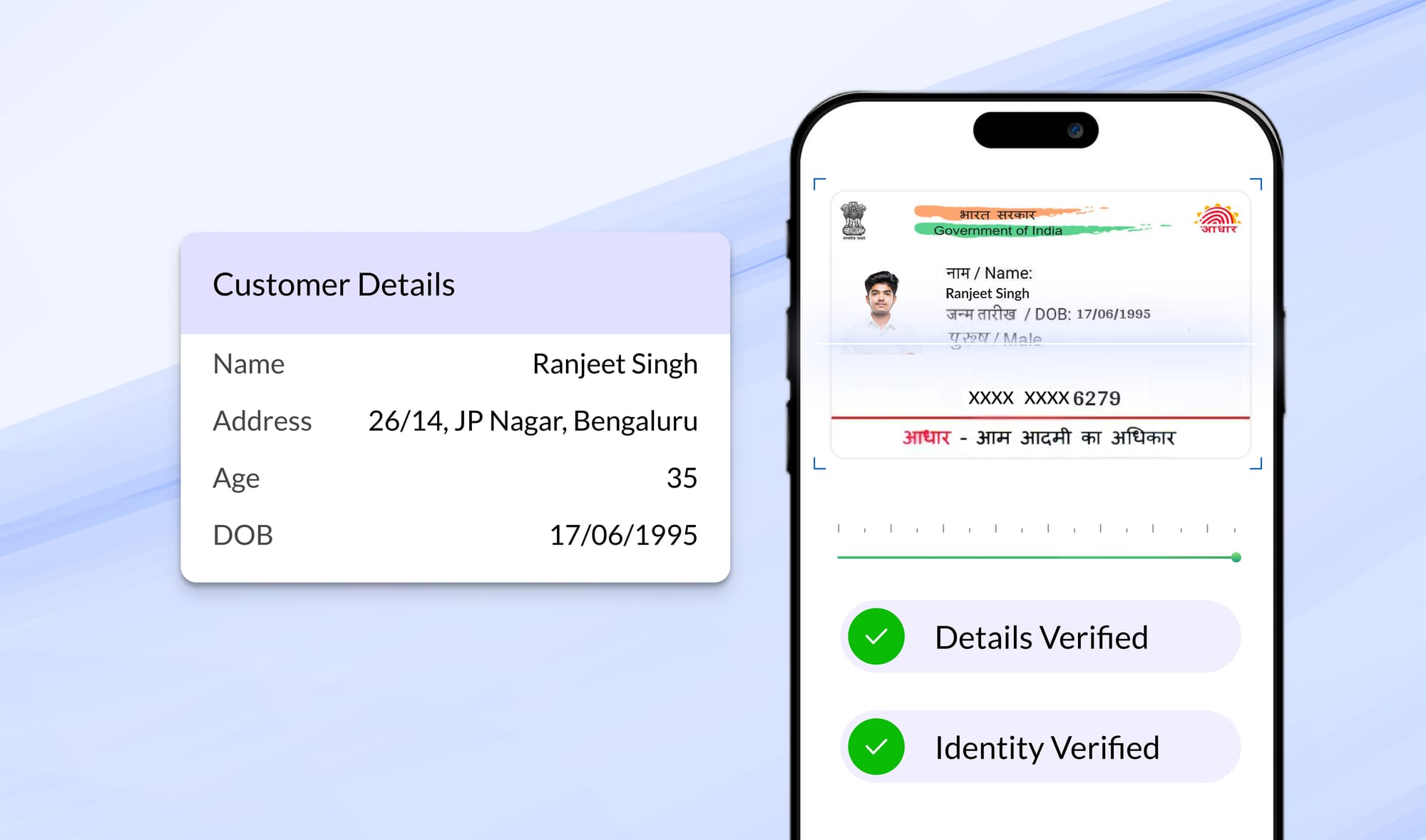
With Aadhaar gaining prominence as an identity in every aspect of our lives today, we shall in this blog discuss Aadhaar, its use, and its relevance for businesses in the identity verification process.
,With Aadhaar gaining prominence as an identity in every aspect of our lives today, we shall in this blog discuss Aadhaar, its use, and its relevance for businesses in the identity verification process. We shall also briefly touch upon the Aadhaar ecosystem and the prominent methods of Aadhaar authentication.
Introduction
Originally introduced to help mitigate fraud and ensure the right persons were entitled to the benefits of social welfare programs, Aadhaar—India's national digital biometric identity—is intrinsically linked to our everyday lives. It serves as a cross-functional proof of identity and proof of address across India.
The 12-digit unique Aadhaar number can be obtained voluntarily by residents or passport holders of India based on their biometric and demographic data. It is devoid of any intelligence, does not profile the Aadhaar number holder based on caste, religion, income, health, or geography, and does not confer any right of citizenship or domicile.
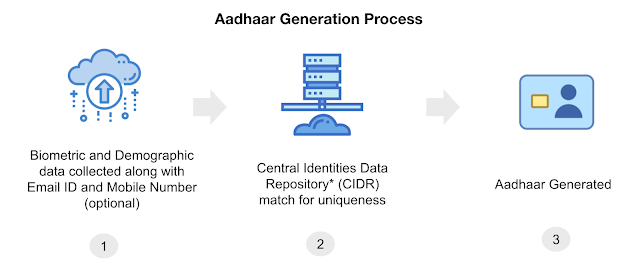
The Unique Identity (UID) is linked to their demographic (name, address, date of birth, and gender) and biometric (photograph, 10 fingerprints, and two iris scans) information, stored in centralized databases. A card is issued to enrollees, and the identification number, together with a means for authentication (biometric or mobile-linked), forms the basis for identification. The database ensures that there are no duplicates in the identity by validating the following parameters

Aadhaar Authentication
The purpose of authentication is to enable an online identity platform for residents to validate their identity proof instantly, anytime, anywhere. For authenticating the Aadhaar number, the UIDAI created a system under which an agency or company must be recognized as an Authentication User Agency (AUA). AUAs authenticate Aadhaar by submitting a person’s Aadhaar number, demographic, and biometric information to the Central Identities Data Repository (CIDR) and, in turn, receive a “Yes” or “No” response on whether there is a match to establish if the person is who he or she claims to be and to confirm the correctness of the data. A registered Authentication Service Agency (ASA) such as Digio operates as the digital intermediary in this process.
Understanding the Aadhaar Authentication Ecosystem

The need for Aadhaar authentication
Aadhaar serves as a Multipurpose National Identity Card and is a strategic plan developed to improve and promote a hassle-free means of providing online facilities. There are several public and private organizations in the ecosystem that are required to validate the user to perform their day-to-day functions. With the availability of several other identity proofs, it becomes cumbersome for entities to carry out the identity verification of every kind of document with full accuracy. It is also easier for the user/individual to furnish a standardized and consistent identity proof for any legal or official validation.
The Digital Aadhaar Boon
Today, with the help of technology, businesses have been able to enhance their growth agenda by enabling better service, quicker, more effective, and more accurate, user-friendly onboarding for customers through automation. Aadhaar has grown to encompass many parts of our everyday lives, such as bank account opening, quick loan disbursement, payments, activating a mobile number, buying LPG, verifying electoral rolls, filing IT returns, etc. In the digital world, re-imaging a KYC process without Aadhaar would be challenging.
Aadhaar has made various government schemes and processes more efficient and effective. It also helps ensure better administration of human resources by monitoring employees' attendance through an Aadhaar-based biometric authentication device. It also improves the turnaround time for hiring by enabling the hiring manager to evaluate the candidate’s credentials quickly, while HR can rest assured of the candidate’s reputation and criminal background. Aadhaar eKYC can also be used to monitor and manage visitors at offices or homes and carry out instant identity checks.

Aadhaar authentication comes with many benefits that could otherwise not be achieved through offline means, as follows:
- Simplified and streamlined process flows,
- Restricting fake, duplicate, and ghost records through database deduplication,
- Ensuring last-mile delivery in the direct benefit transfer process by plugging leakages,
- Digitizing the Know Your Customer (KYC) process
- Reduces the stack of documents and paperwork
- Enabling instant verification of customers
- Facilitating online interoperable financial transactions at PoS (Point-of-Sale / microATM)
Aadhaar has also contributed to several quantitative business metrics such as reduced operational costs, shorter customer onboarding time, increase in savings, etc.
Prominent Aadhaar-Baseda Services
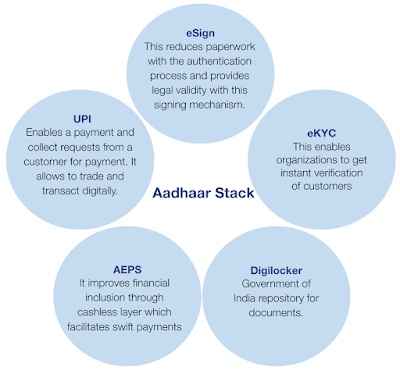
Generic KYC onboarding flow
Most onboarding processes today incorporate a few minimal steps for a quick, hassle-free, and user-friendly customer experience. Here is a generic eKYC-based onboarding flow implemented at Digio, which has helped 500+ businesses, including corporates, banks, NBFCs, and stock broking entities.
Non- Assisted Journey

Assisted Journey
eKYC
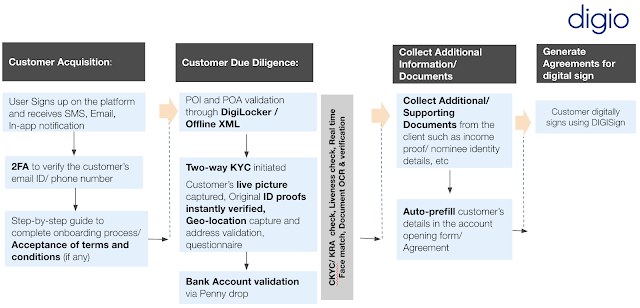
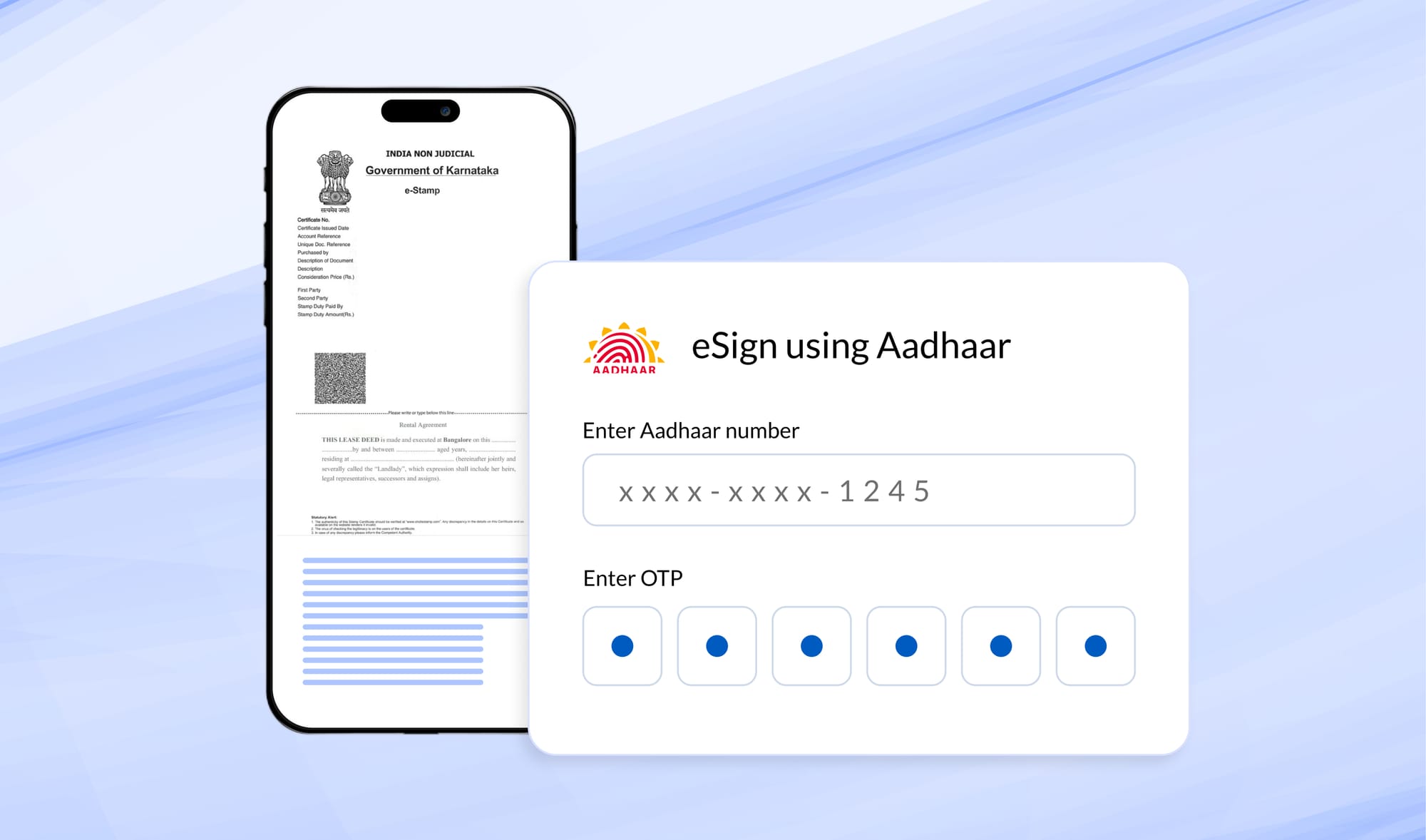
Aadhaar eKYC is the digital KYC process facilitated by the Unique Identification Authority of India (UIDAI). This online eKYC is conducted either via biometric authentication or OTP validation, and offline methods utilize XML files and QR codes. An OTP is sent to the customer’s Aadhaar-registered mobile number, or the customer’s fingerprints and retina are scanned and compared with the biometric data recorded in the UIDAI database.
eKYC enables instant and secure paperless governance through a simple, cost-efficient verification process. The service is made inclusive and accessible across public and private organizations.
Digilocker
Digilocker is a unified document wallet created for citizens to store and retrieve authentic documents in a digital format. It was launched as part of the Digital India Programme for Paperless Governance. The digital locker system consists of a repository where the documents are uploaded in a standard format for real-time secure access. It also has an access gateway that controls and secures the online mechanism. The gateway will identify the stored document based on a unique reference number called a URI to fetch the document from the repository.
Users can sign up for services by linking their Aadhaar cards and can upload documents in a digital locker.
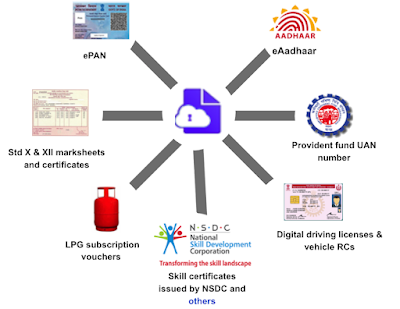
Digilocker provides an account in the cloud with a storage upto 1GB storage space to every Aadhaar holder to access authentic documents/certificates. Prominent documents that are widely stored and fetched from Digilocker include eAadhaar, digital driving licenses & vehicle registrations certificates, ePAN, Std X & XII mark sheets and certificates, LPG subscription vouchers, skill certificates issued by NSDC, Provident fund UAN number, etc. The Passport Seva Kendra has also integrated with Digilocker for digital verification of identity and address proof, and does not mandate the passport applicant to submit hard copies of any identity documents. SEBI has also considered Digilocker based Aadhaar document as an OVD. Hence, a SEBI-regulated entity is not required to carry out video-based KYC if Digilocker is opted.


Offline Paperless eKYC (Offline Aadhaar-Based, XML)
Aadhaar offline XML is a secure, shareable document that can be used by any Aadhaar number holder for offline verification of Identification. This file can be generated digitally by accessing the UIDAI resident portal. The user will need to authenticate their Aadhaar details through an OTP validation. Upon successful authentication, the user’s Name, Address, Photo, Gender, DOB, hash of registered Mobile Number, hash of registered Email Address, and reference id which contains the last 4 digits of Aadhaar Number followed by a timestamp, can be obtained in a digitally signed XML.


Comparing the different Aadhaar solutions


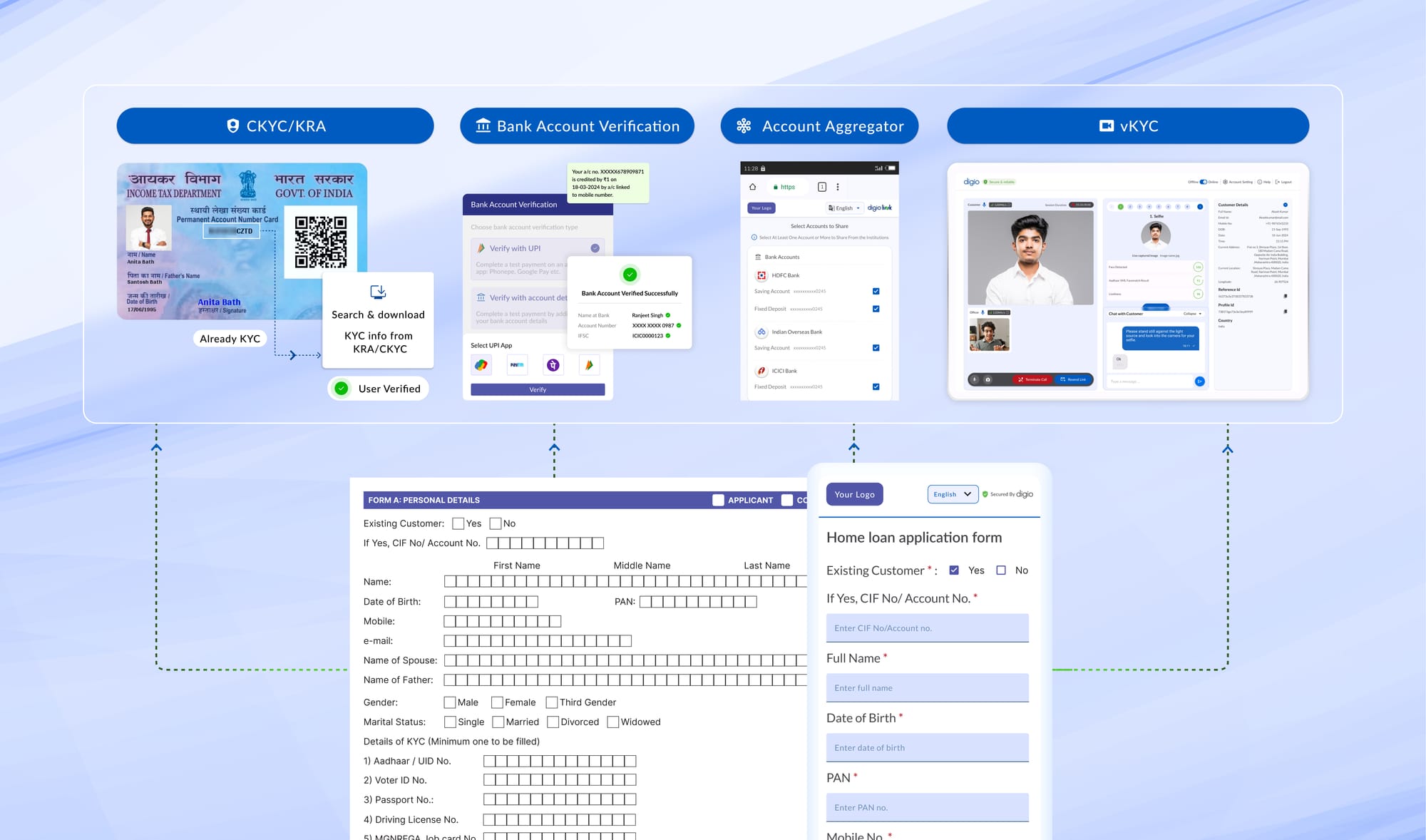
The role of the the Central KYC registry (CKYCR) and KYC Registration Agencies (KRAs) in helping regulated entities complete the KYC process
Any regulatory requirement, entities are required to comply with the CKYCR and KRA provisions as defined by the respective regulatory bodies (RBI, in India. The individual’s KYC data that is validated during the onboarding process needs to be submitted to the central registries, which are CKYCR and KRA in India. These registries do not store in-person verified KYC information on individual systems. The existence of these central databases eases the verification process for service providers.
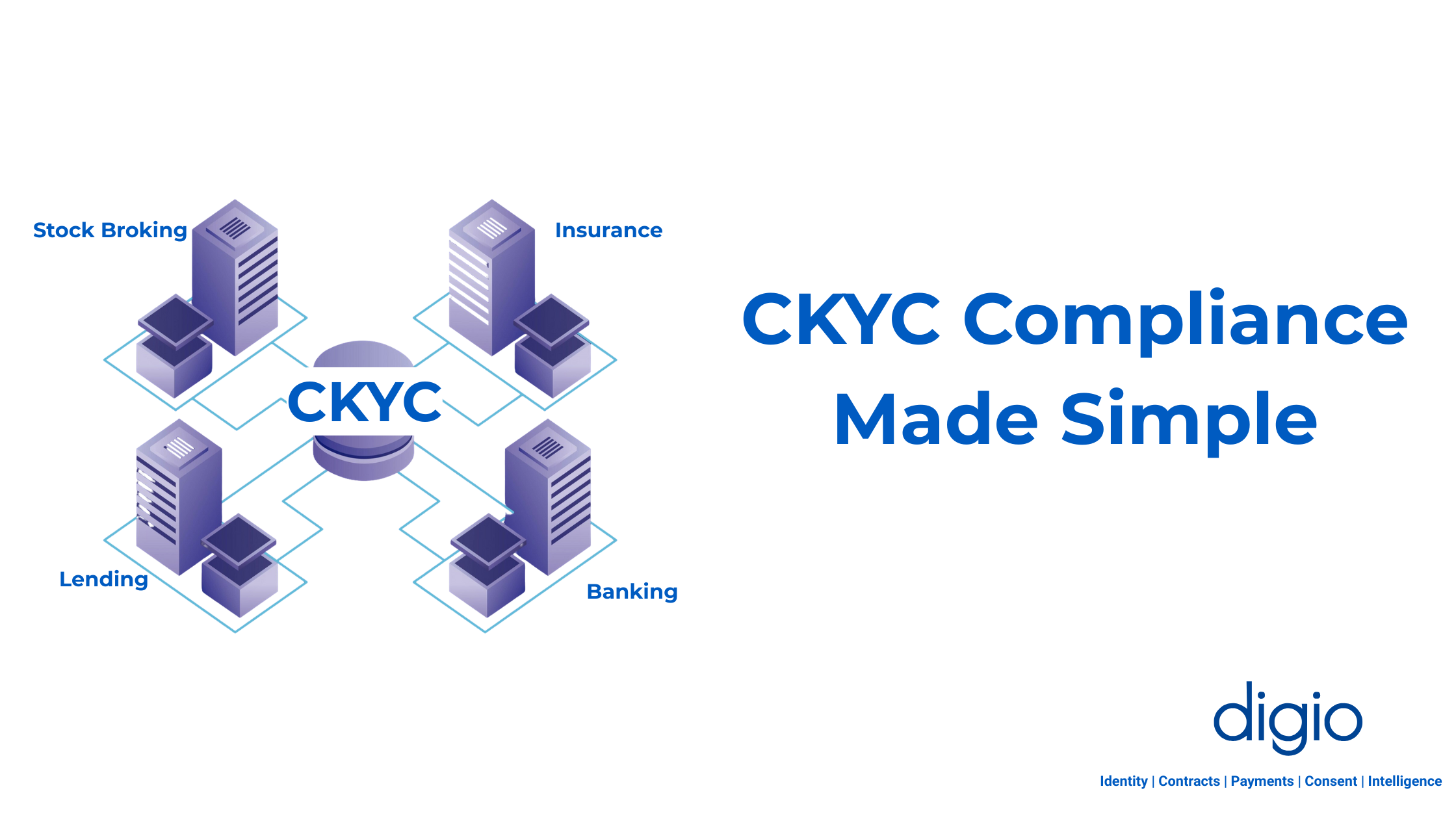
CKYC was initiated to bring all KYC in the financial sector under a single umbrella. CKYCR is governed by the Central Registry of Securitisation, Asset Reconstruction and Security Interest of India (CERSAI) and is a comprehensive database that verifies and stores customer KYC information. It generated a unique 14-digit number linked to the ID proof, which can be used by the individual for all future references. On the other hand, KRA holds PAN as the unique identifier. In India, there are 5 KYC Registration agencies, namely, CVL, NDML, Karvy, CAMS, and DOTEX. An individual’s KYC can be searched and verified using his/ her PAN number in the KRA database.
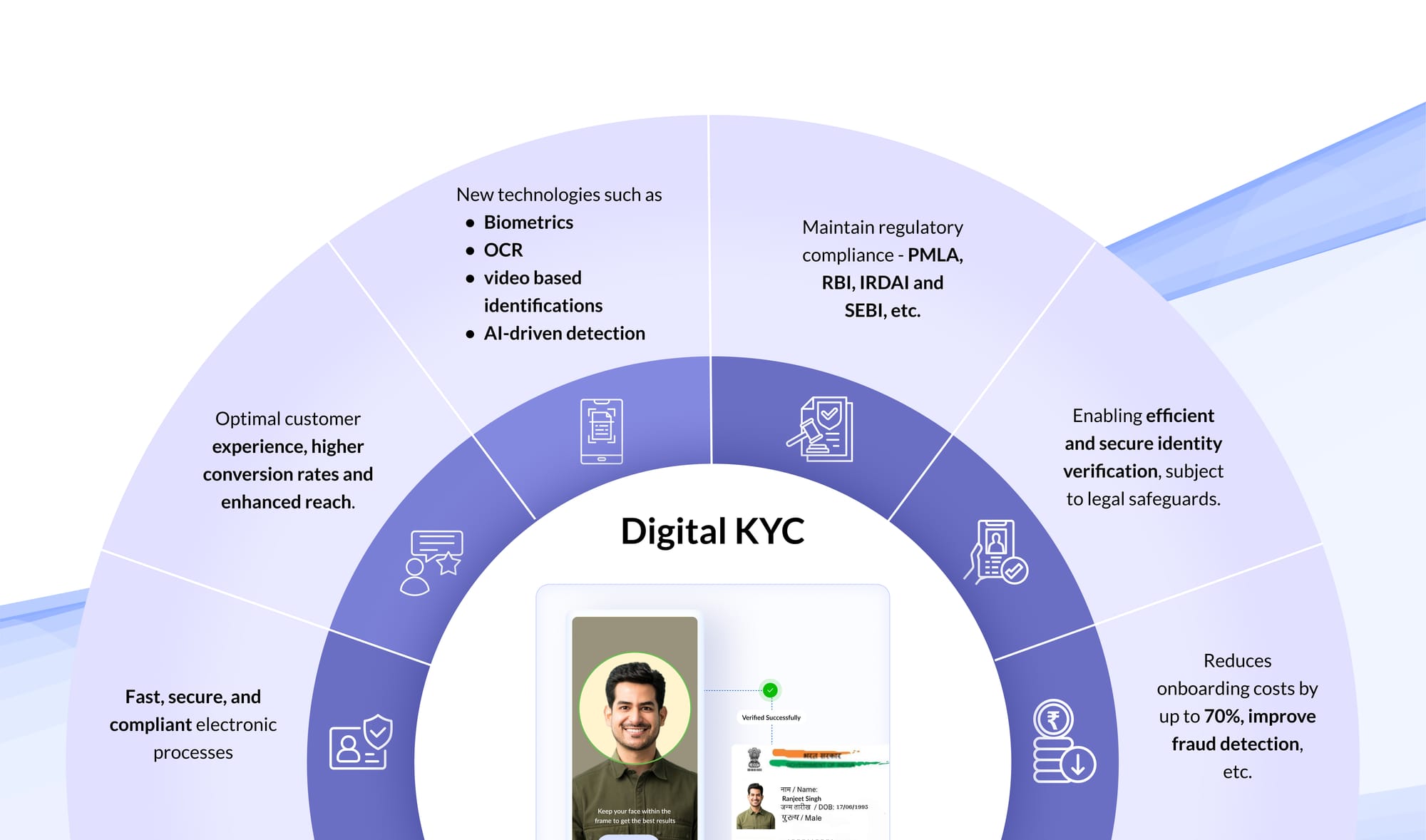
Instant identity verifications can help establish trust in the onboarding process. Today, with the advancement of technology and secured Aadhaar based solutions, digitization comes with high-quality, quick, and accurate check/ response results to help prevent fraudulent activities and ghost identities, and simultaneously offer a superior customer experience. DIGIKYC aids in taking informed decisions on the go - anytime, anywhere, and ensures a secure and smooth onboarding experience.
To know more, feel free to write to us at bd@digio.in or support@digio.in.
Read more Blogs
DPDP Consent Management: What Every Data Fiduciary Must Know in 2026
How DPDP consent management works: consent capture, lifecycle, consent managers, and what data fiduciaries must implement before May 2027.
DPDP Compliance Platform: Complete Guide for Indian Enterprises (2026)
Everything Indian enterprises need to know about choosing a DPDPA compliance platform: features, deployment options, timelines, and penalties. Updated for 2026.
DPDP Compliance for Banks: A CISO's 90-Day Roadmap
Indian banks sit at the intersection of two regulatory forces: the Reserve Bank of India's Data Governance Guidelines and the Digital Personal Data Protection Act, 2023. With full DPDPA enforcement beginning May 13, 2027, and penalties reaching ₹250 crore, banks face the highest compliance stakes of any sector. The challenge isn't just regulatory, it's operational. Banks handle tens of millions of data principals across dozens of digital properties (mobile apps, net banking, UPI, loan portals,

Digitally transform business operations with Digio!
Try first. Subscribe later.
Boost your legal ops efficiency by 80%
Learn how Digio can enhance your business productivity
Get 1-on-1 business use case solutioning
Speak with our business consultants to get a solution walkthrough for your business requirement
Test the APIs
Let your development team test our API suite to understand configurability and product integration
Subscribe
Get the best in industry commercials for your business usecase